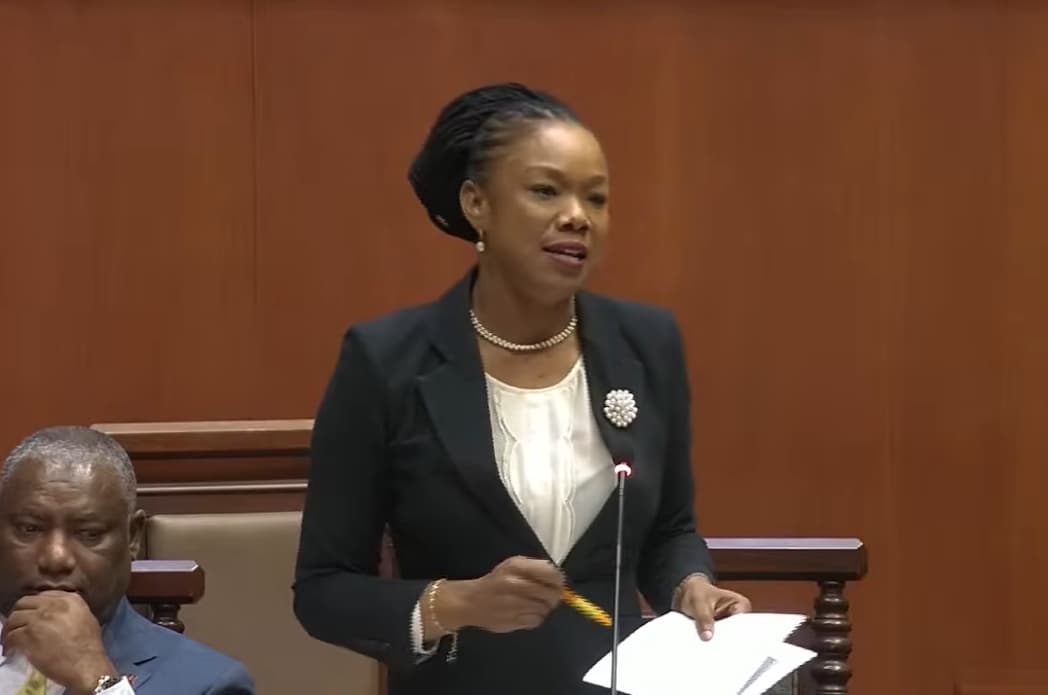
Senator Malaka Parker closed her contribution to Monday afternoon's debate on the Firearms (Amendment) Bill 2026 with a rapid-fire legal and fiscal critique warning the Senate that the region's own courts have struck down mandatory minimum sentences before and also warning that the bill punishes intent and action alike.
"We have to be tough on crime. We have to be especially tough on serious crime," the opposition senator stressed. "We need to do it the right way."
The Precedents the Attorney General Never Addressed
"I have to tell you — and I was waiting to hear the Attorney General address it in the Lower House — that we have actually faced challenges on that before," she said of mandatory sentencing. "I'm dropping the names for you."
The senator cited two authorities. In the case she identified as Regina v Hunton Francis, she told the Senate, the High Court referred to an earlier 25-year minimum sentence for robbery with a firearm that "was struck down as unconstitutional." And in Felbert Edwards v Regina, she said, the Eastern Caribbean Court of Appeal "examined the constitutional consequences of mandatory imprisonment that did not permit proper consideration for mitigation and individual circumstances."
The implication: the 15-year minimums senators spent Monday debating may not survive the very courts the Prime Minister has spent weeks attacking.
Intent and Action, Same Sentence
Senator Parker also drilled into the bill's text, specifically its treatment of possession with suspected intent alongside actual use. "When you look at the act, they don't even have to commit the crime," she said, referencing Sections 7 and 8 of the amendment. "If you're found with the firearm and they suspect that you have the intent... [it] is 15 years. And Section 8 a person who makes or attempts to make any use whatsoever of a firearm. So, the person who [doesn't] commit a crime with a firearm and the person who does commit a crime with a firearm are likely to have the same minimum sentence."
She was careful to anchor the critique in agreement with the bill's premise: "Nobody should have a firearm. I accept that."
A Certificate Instead of a Conscience
Her sharpest legal objection targeted the provision government members have showcased as judicial flexibility — the requirement that a trial judge who finds the prescribed minimum "manifestly unjust" must impose it anyway, then issue the convicted person a certificate to seek relief at the Court of Appeal.
"The courtroom is supposed to be a court of justice, but their hands are tied to the 15 years," she argued. "This act is telling us that the trial judge, the person who looked at the whole case, must sentence you to that even though they know that it is manifestly unjust and not proportionate to the crime. And then they have to write a certificate to send you to the appeals court to fight for it which is reversing the process. And I'm saying that is cowardly. That's not how justice works. It is not how justice looks."
"The same discretion that you're removing from the trial judge you're saying that the appeal judge must still have [it]," she added. "What are we doing?" And she flagged a practical trap: "Appeals are not granted as of right."
"Put the Money Where the Mouth Is"
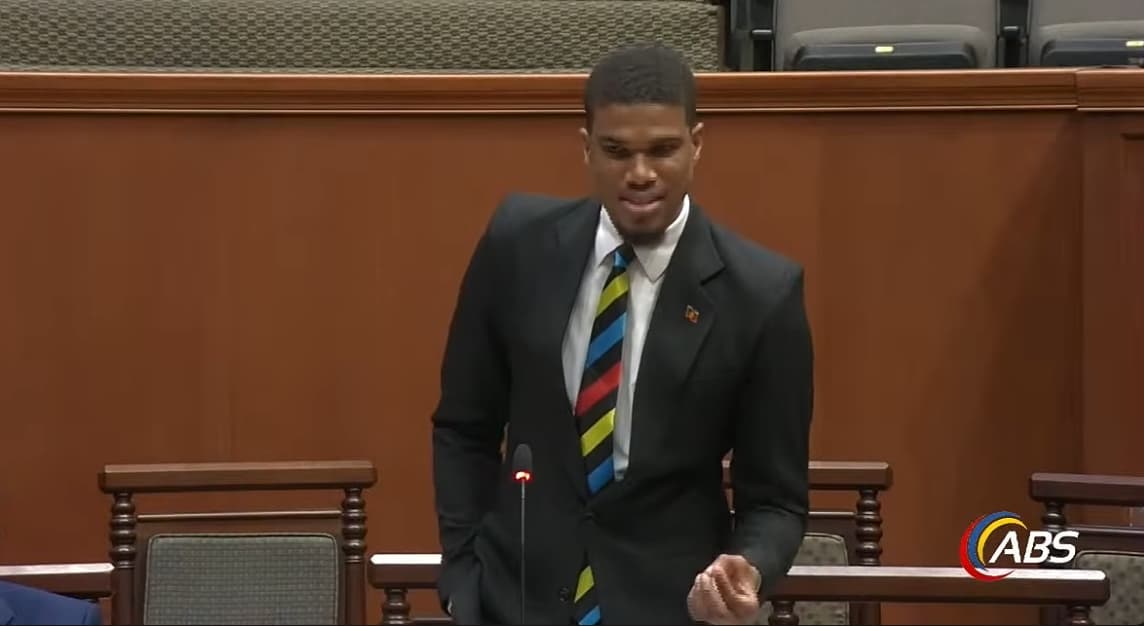
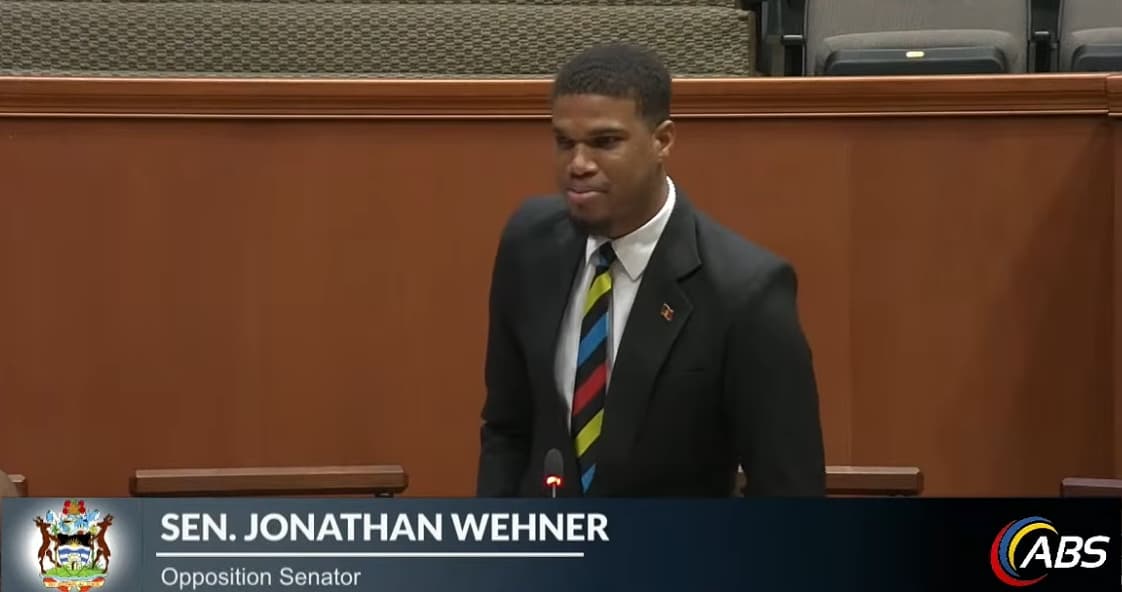
Like Senator Jonathan Wehner, whose morning-session fiscal examination traced years of underspending on the Antigua and Barbuda Forensic Services, Senator Parker turned to the budgets. "If you look at our institutional apparatus for crime in consecutive budgets — I checked the last five years or so — I don't think that our various institutions are getting the right money, and they say so," she said, pointing beyond the forensic department to the state of police accommodation: "We could talk about our police officers, their buildings and where they're housed. It's years they're complaining about these things. How can they work in dilapidated facilities?"
Most striking was her claim about the office now expected to prosecute a wave of new mandatory-minimum cases: "The Office of the DPP, Madame President, actually this year got a reduction in what is assigned to that office. [Are] we serious? And now you're giving that office more work to do, if you're sending up everybody."
Senator Parker then issued a warning that echoed concerns raised across the chamber: "Prison is a training ground. If we think we're going to send people up there for 15 years and we don't have proper rehabilitation programmes... The longer you send people up there, the more likely they are to get converted," she said, describing conditions that are "literally creating a cesspool to train more criminals" including for those imprisoned for lesser offences.
A Solved Problem?
Her closing argument reduced the bill to a thought experiment: "I guarantee you, my people — jail, take all of the people you think have firearms and jail them for 15 years, and tell me if you think we would have solved the problem. No, because the communities from which they came are still there. The homes from which they came are still there. The broken school systems, or lack of programs within the schools, will still exist. That little boy who has a temper, who was not trained in terms of resolving dispute without violence is still there, and we will have another crop coming up."
"I submit that we are all on the same page in wanting to rid society of gun crimes," she ended by saying, "but I do not accept that this is the way."