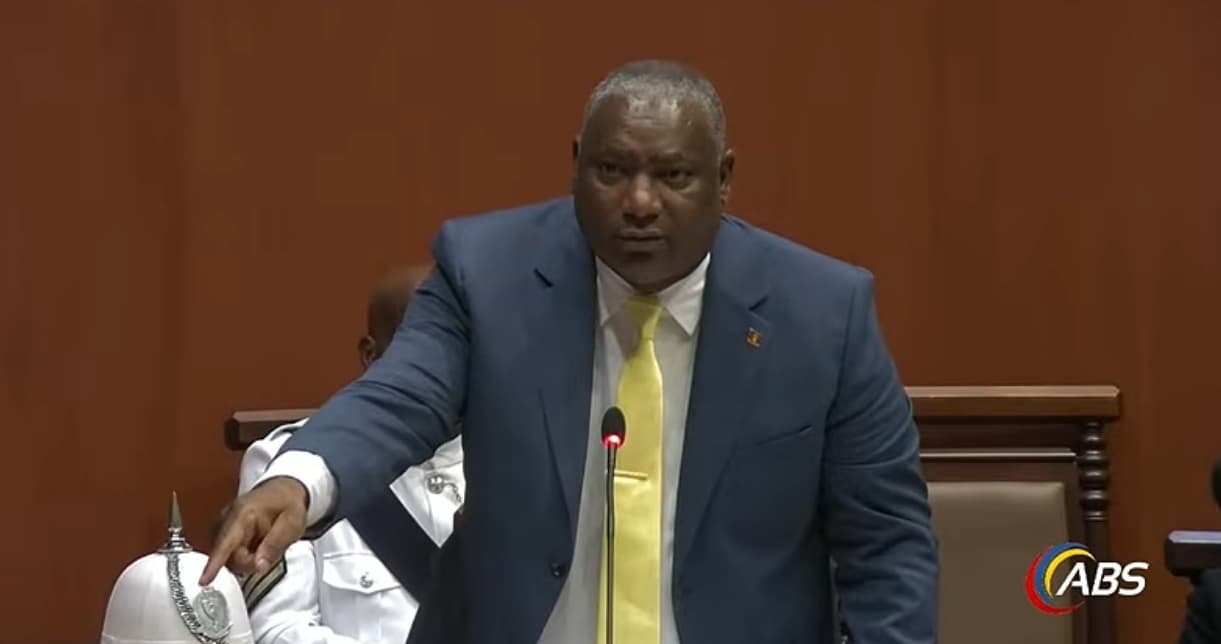
Minority Leader Senator Chester Hughes opened his contribution to Monday afternoon's debate on the Firearms (Amendment) Bill 2026 with two portraits of the same country — one remembered, one lived — arguing that the distance between them, not the length of prison sentences, explains why the Senate was sitting at all.
The first picture was yesterday's Antigua: a childhood of sports after school, the evening news by instruction, "a little comedy show" before bed; weekends of church and "your memory verse," Sunday dinner. And, after school on Monday, a standing appointment: "you report to your grandparents' home, where they will care for you until your parents return from work, and the cycle continues."
"That was yesterday, Madame President," he said. "And I'm sure some aspect of what I just said would resonate as you reminisce in your mind."
The second picture was today's Antigua: "Fast forward to today, where the grandmother and the mother are working. Nobody to look after that child. The child is left to wander after school in a wider society, because the parents are struggling and cannot afford to send them to after-class [programmes], and there is no system to keep these kids busy, because some of them, their parents can't afford to enroll them into sporting activities after school," the Minority Leader said. "So, they become wanderers of society and then start to be influenced by evil forces and vices within communities."
"This is not a Labour Party issue. This is not a UPP issue"
That erosion, Senator Hughes argued, is the true subject of the firearms debate. "This is the Antigua today, which has evolved — an Antigua where we don't have the family structure anymore. An Antigua where everyone in the family is doing their own thing... the son, the daughter, the mother, the father are doing their own thing," he said.
"Why we're here today is because the breakdown in society is now affecting the wider community," he continued. Senator Hughes then placed the crime crisis firmly above party lines, in terms that matched the government's own appeals for a united front: "This is not a Labour Party issue. This is not a UPP issue. This is an issue that affects Antigua and Barbuda."
In that, the Minority Leader stood alongside the chorus heard across both chambers — from Senator Ashworth Azille's description of "a deep sociological issue" in the morning session to Barbuda MP Trevor Walker's insistence in the Lower House that crime "is not partisan."