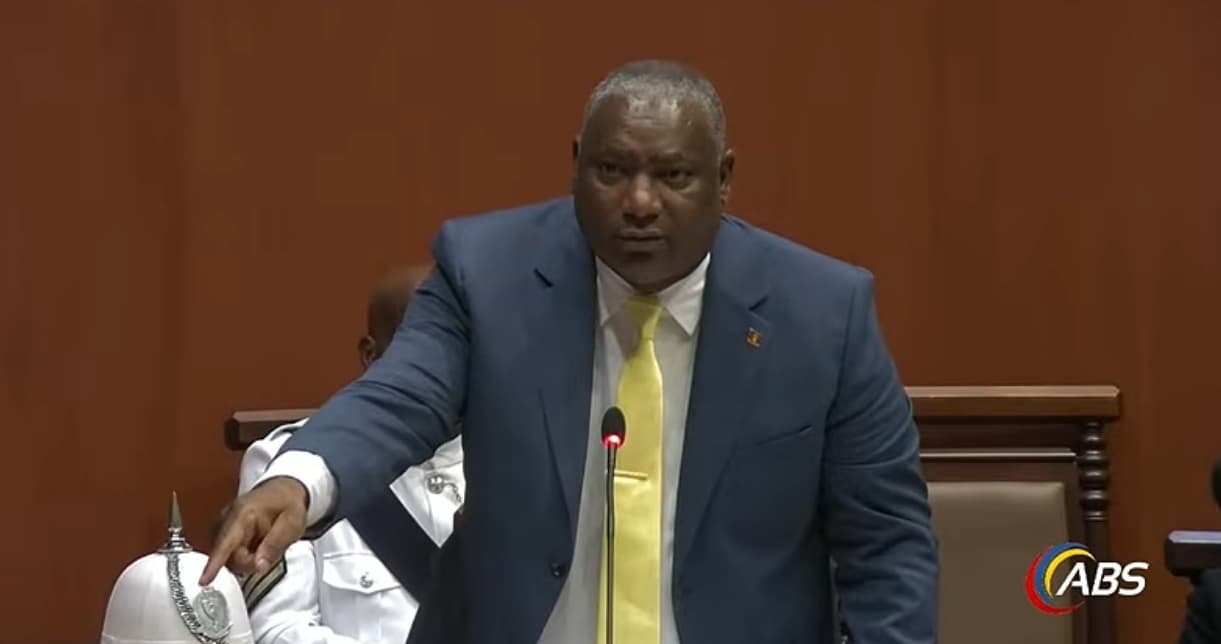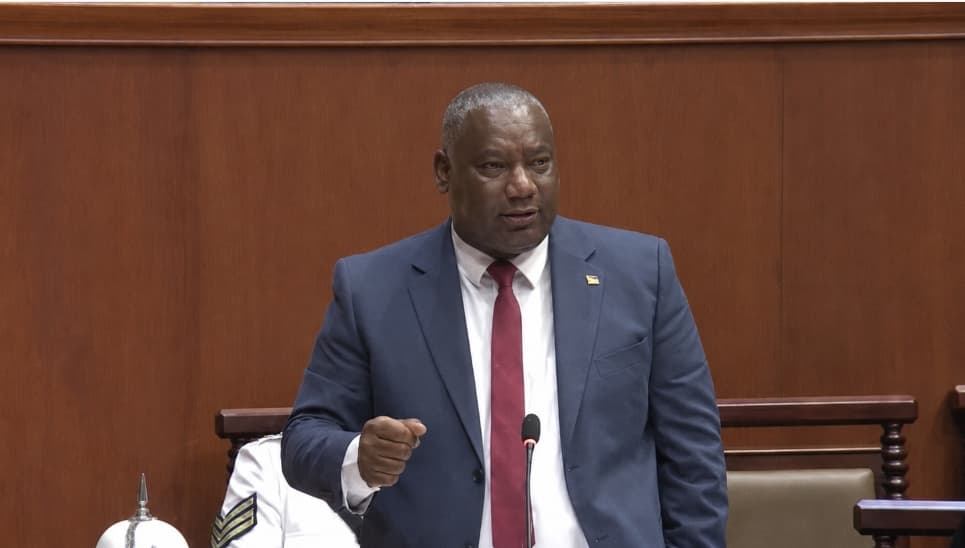
Minority Leader in the Senate, Chester Hughes, subjected the Airport Administration Charge (Amendment) Bill, 2026 to a clause-by-clause interrogation during Thursday's sitting of the Upper House, charging that the amendment strips parliamentary oversight from the law, leaves key revenue allocations dangerously vague, and was presented to the public without proper explanation of its real-world impact.
Senator Hughes opened his contribution on a somber note, offering condolences on behalf of the opposition benches, Opposition Leader Jamale Pringle and the United Progressive Party leadership, to the government and people of Barbados, the Barbados Cricket Association and the wider cricketing world on the passing of West Indies legend Sir Garfield Sobers, whom he described as one of the ambassadors who placed West Indies cricket on the world map.
"Why remove the oversight?"
Turning to the bill, Senator Hughes faulted government senators for speaking only to the amendment and its projected revenues without guiding the public through its effect on the parent legislation — the Airport Administration Charge Act, No. 3 of 2012.
His central objection concerned the amendment to section 13. Under the parent act, he explained, the minister may amend the schedule by regulations, but those regulations are subject to negative resolution of the House of Representatives — meaning they must be laid before Parliament. The amendment, he said, repeals Section 13 in its entirety and replaces it with language allowing the minister to amend the schedule "by order upon approval by cabinet" — with no requirement to bring anything back to Parliament.
"Why is it that the regulations, with parliamentary oversight in place in the parent act, you are now removing the parliamentary oversight in this amendment?" he asked, describing the change as "most vexing" and calling on the Leader of Government Business to explain whether it was a deliberate policy or an act of omission the drafters should correct.
The cost to travellers — and a Barbuda anomaly
On the 25 per cent increase itself — moving the charge from US$40 to US$50 on international passengers arriving, departing and transiting — Senator Hughes rejected suggestions that Antiguans and Barbudans are unaffected, and translated the figure into practical terms: "a family of five no matter their nationality travelling from the United States who have already budgeted and paid for their vacation will have to find US$50 more from September 1, 2026."
"That is nothing to you because you don't care," he charged across the aisle to the heckling government senators. "It doesn't affect you. You have a diplomatic passport."