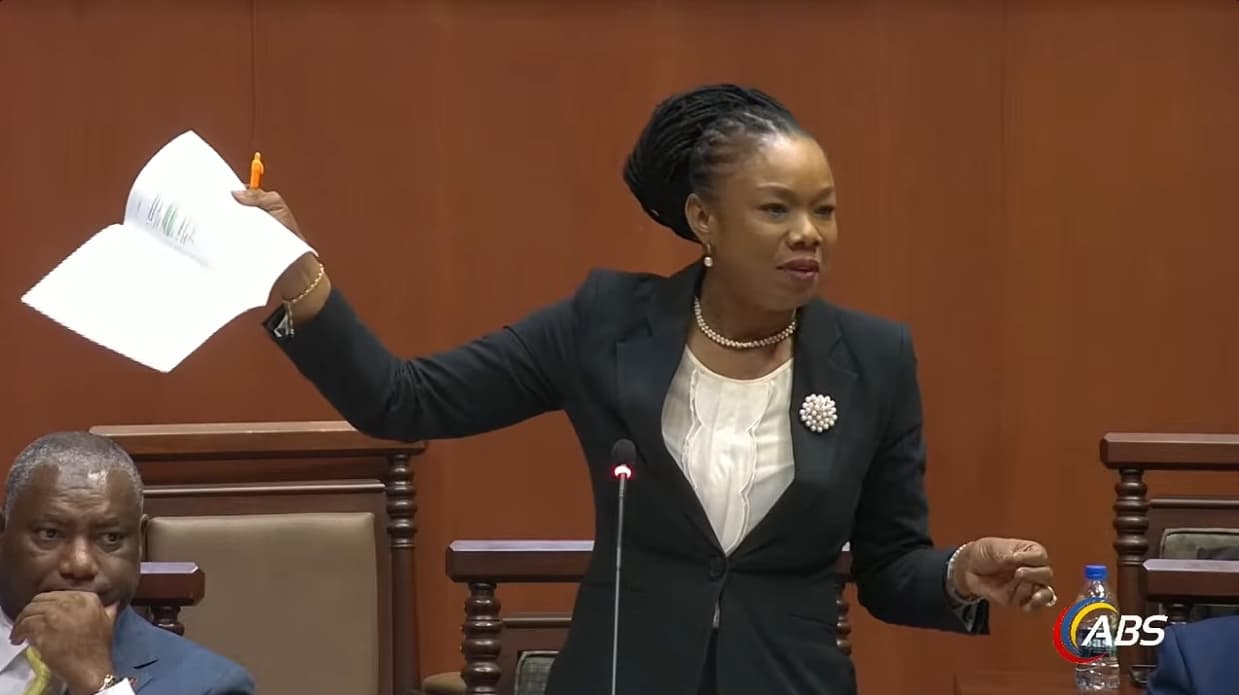
If the Firearms (Amendment) Bill 2026 rests on the premise that Antigua and Barbuda's courts are soft on gun criminals, Senator Malaka Parker came to Monday afternoon's Senate debate determined to test that premise against the record. And, by her account, the record fails.
"Because of my research background, Madame President, as a development professional — one of the hats that I wear — I need data," the opposition senator told the chamber. "Policy needs to be driven by evidence, not people's feelings. Not because you suddenly feel the crushing weight of what it actually means to run a developing state... and so you feel the need to respond with bluster. We need data."
250 Repeat Offender Claim Deconstructed
Her first target was the figure the Prime Minister has placed at the centre of the public case for mandatory minimums. "The Prime Minister claimed that there are circulating in our system approximately 250 repeat offenders or so. And it was in the context of chiding the judiciary that this statement was made. Because the implication is that the judiciary keeps giving them low sentences, and they come back into society and commit more crimes with firearms," she recounted.
Taken at face value, she argued, the number indicts the government more than the bench: "If that is the case, Madame President — 250 criminals just in a revolving door, in and out of our prison, and they are repeat offenders where firearms are concerned — then we have a greater crisis than we believe."
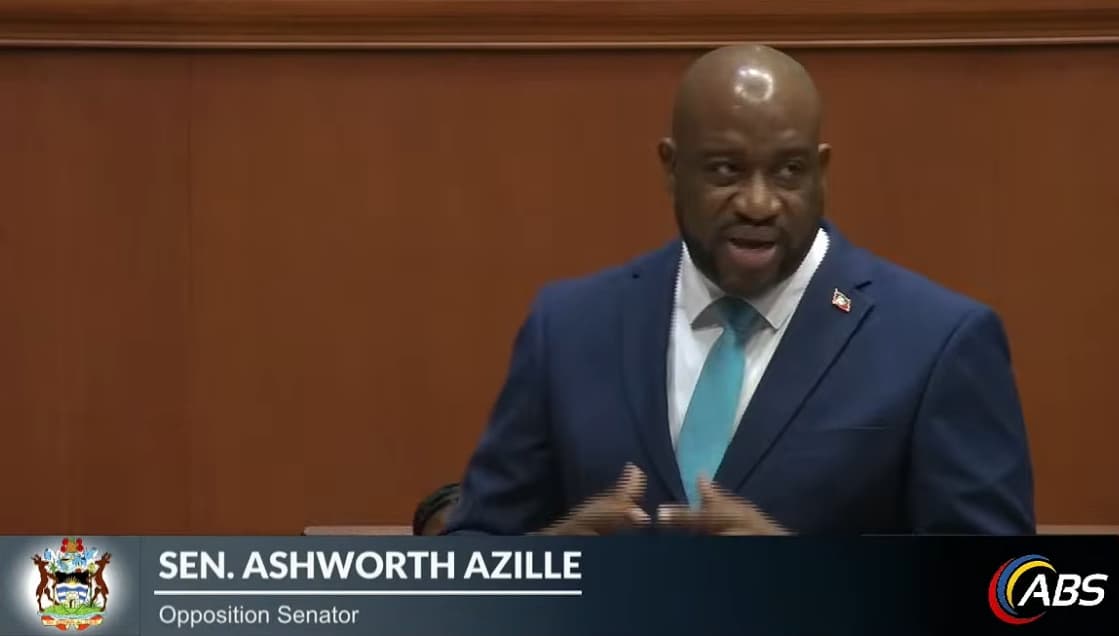
But the figure, she said, has never been broken down. "What we did not have is a deconstructing of that 250. We do not know from that figure really and truly what the previous convictions were about — whether they were in fact firearm-related," she said, crediting Senator Ashworth Azille for pressing the same questions earlier in the debate. Without that analysis, she warned, Parliament cannot know whether it is seeing hardened gun offenders cycling through the courts or an escalation pattern requiring a different response entirely. "When we have that data, it informs the response. Not every response has to be an emotional one. The reason why this type of information matters is so that we can address the correct thing. Full stop."
5 Successful Appeals of Sentences in March Alone
The senator then turned to the central allegation — that firearm sentences are too low — and conceded part of it. "I accept that there have been, in the system, people that commit crimes with firearms whose sentences I also believe are disproportionate to the crime," she said. "Sometimes you hear the sentence, you want to know am I on Mars? That don't make any sense."
But the fuller picture, she argued, cuts the other way: "The research also shows, Madame President, that there have also been many cases — as late as March 2026 — of appeals, at least five of them in the month of March alone, where the appeals court reduced the sentence from the lower court. At least five of them in March alone, just gone."
"There are people who have gotten sentences by the same judiciary that we're flinging stones at — or some people are flinging stones at — [who] thought their sentences were disproportionate, and they appealed them," she said, noting that a man known as "Mongoose" had been publicly celebrated "on the cover two months ago... with his attorney, for winning his appeal from his gun conviction."
Her conclusion struck at the language the Prime Minister has used to justify the bill: "We cannot on one hand be saying — to use the Prime Minister's language — [that there is a] 'lenient sentence orthodoxy.' The evidence doesn't show that. That's what I'm saying. The evidence does not show that. If you go and you check the evidence, the data, you see how many persons have won appeals [of harsh sentences]."