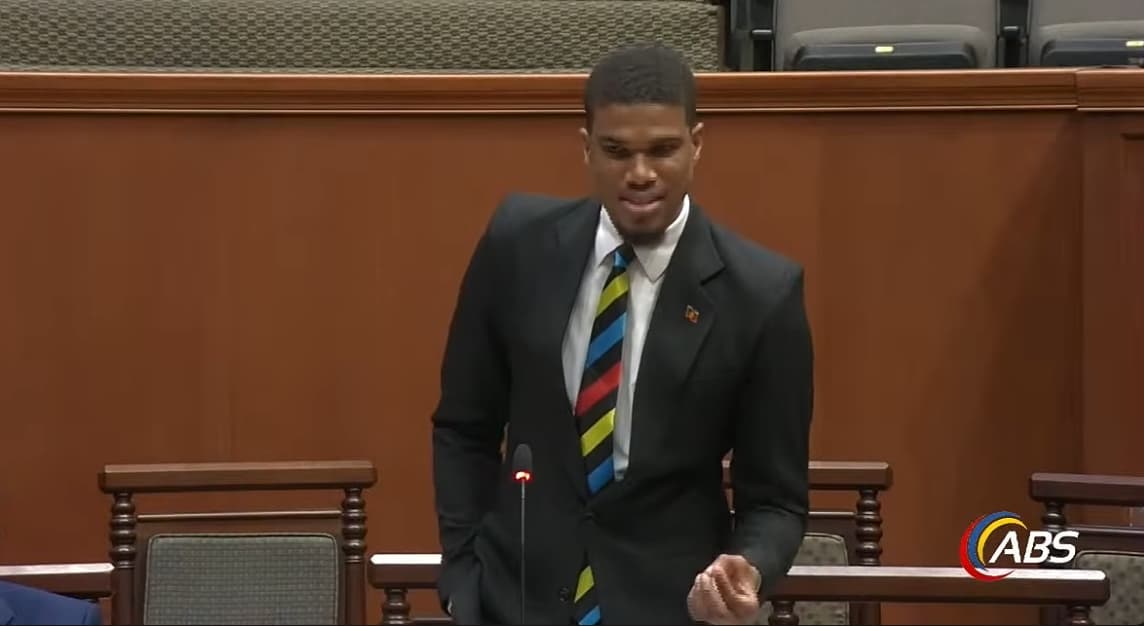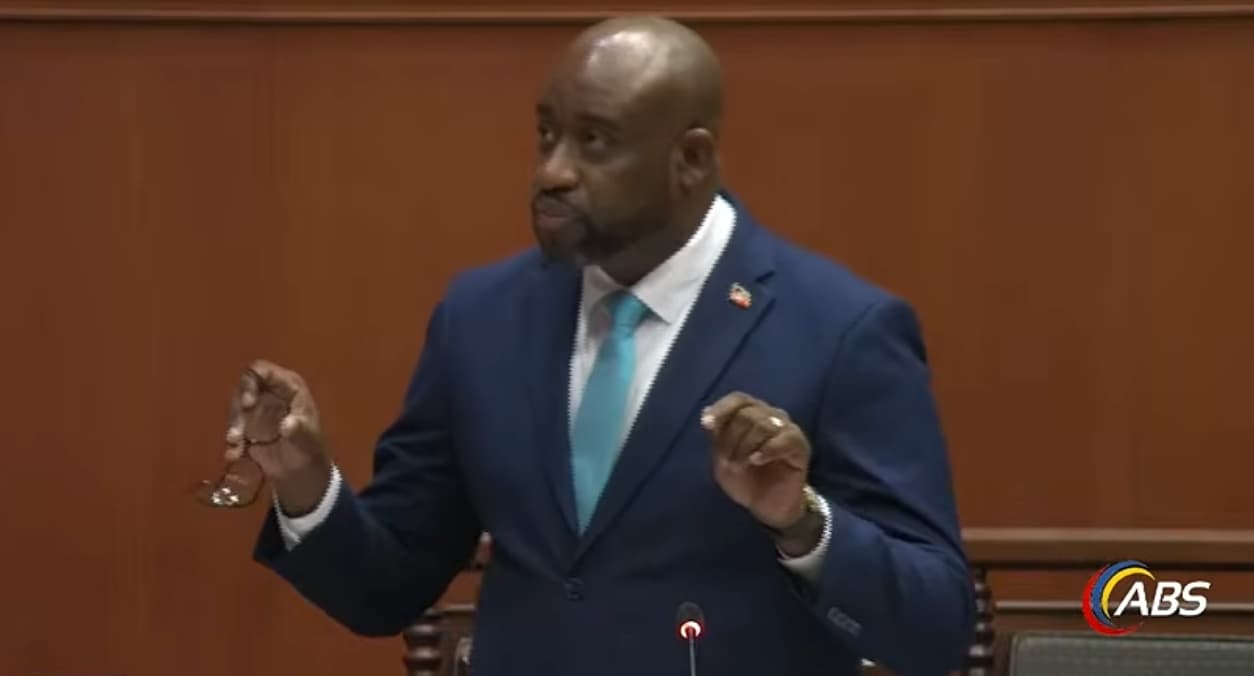
Leader of the Opposition Hon. Jamale Pringle supported stiffer penalties for gun crimes during the September 28 sitting of the House of Representatives, declaring there is "no doubt" that persons who commit serious crimes with firearms "should be faced with the full extent of the law." MP Pringle warned the government that the Firearms (Amendment) Bill 2026 will only be as strong as the agencies paid to enforce it.
"This piece of legislation is as strong as the resources the government puts into the agencies that are to enforce this legislation," the United Progressive Party (UPP) leader told the House. "If you cannot catch the criminal, this bill serves no purpose."
The Bill, moved by Attorney General Steadroy 'Cutie' Benjamin, introduces minimum sentences for a range of firearm offences — from unlicensed possession and carrying guns in public places to selling, manufacturing and importing firearms — and was passed by the House that same day, with amendments made at committee stage. The Attorney General, pointing to Jamaica's experience with tougher gun penalties and to a wave of shootings at home including the recent home invasion in which a pregnant young woman was murdered and a schoolboy shot in the face, said the Browne administration was determined to "fight fire with fire and steel with steel." Real News has chronicled that killing, of 20-year-old Saquania Anthony of Bathlodge, and the year's relentless record of gun violence despite two flagship police operations.
"Not the Saving Grace"
While backing "serious measures," MP Pringle cautioned that the legislation, which he described as comprehensive in its treatment of penalties, addresses only one aspect of the crisis. "I am of the view that this alone is not the saving grace of Antigua and Barbuda," he said.
He pointed to a troubling shift in who is pulling the trigger. "It's not the persons who are of age 35 and older committing these serious crimes. The age group is getting younger and younger, which speaks to a greater social problem that we must address in this country," the Opposition Leader observed, noting that the penalties regime "is only effective if the individual is caught."
That, he argued, makes prevention the real test. "What are we doing, Mr. Speaker, to prevent these firearms from entering Antigua and Barbuda?" he asked, recalling repeated government announcements about beefing up the borders, strengthening the police and expanding surveillance, only for the approach to relax "as if the situation is not a public nuisance."
Forensic Lab Promised Since 2018 — "Is It Fully Operational?"
MP Pringle reminded the Attorney General that a forensic laboratory to improve the country's forensic capacity has been under discussion since 2018, and he questioned whether it exists in anything more than name — likening it to the Information Commissioner, who, he said, is "there by name... but still without a place to work."
"Is it fully operational? Do we still have to send overseas with our own forensic lab being here?" he asked.
The Opposition Leader also pressed the Government on what happens after illegal guns are seized. While the authorities boast of firearms retrieved from the streets, he said, "what I have not heard [is] what happens after they are retrieved... I'm not hearing anything on the issue of tracing firearms so that we can plug the holes or disrupt the networks that are importing firearms into Antigua and Barbuda."
He recommended that a firearm-tracing unit be established within the Royal Police Force — if one does not already exist — to trace every recovered weapon "right back to the manufacturer," alongside greater collaboration with regional and international agencies to dismantle trafficking networks. He signalled support for government measures to strengthen the Customs Department's detection capacity: "I am in support of those things, because today it's somebody on the street; tomorrow it can very well be me."
Police "Cannot Even Get Uniforms"