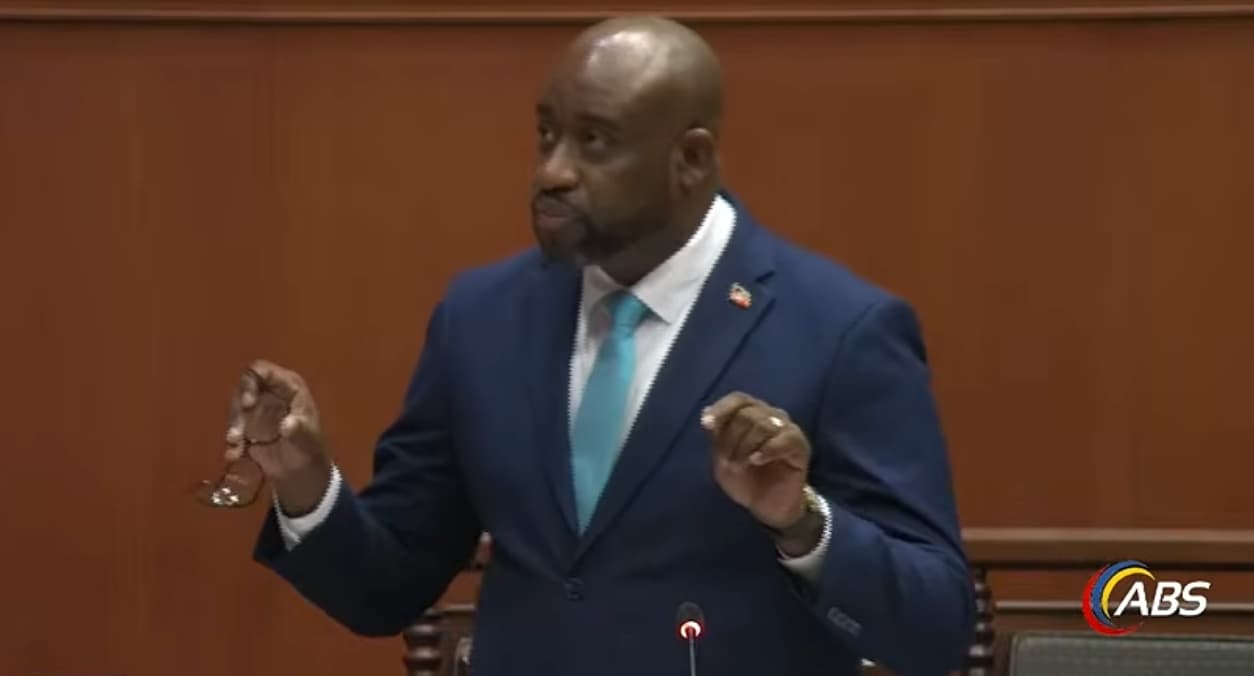
Leader of the Opposition MP Jamale Pringle is calling for a fundamental shift in the fight against violent crime, arguing that the government's fixation on bail and sentencing addresses only the aftermath of bloodshed while illegal guns continue to pour across the nation's borders unchecked.
"Bail comes after an arrest, and an arrest comes after the crime has been committed. Sentencing comes after a conviction," the United Progressive Party leader said Monday night on Progressive 107.3 FM's Straight Talk programme with host Jason Mannix. "I want us to deal with what happens before the trigger is pulled."
"Every Illegal Firearm Raises a Border Security Question"
At the heart of MP Pringle's argument is a simple fact: Antigua and Barbuda manufactures no firearms. Every illegal weapon on the streets, he said, therefore "raises a border security and organized crime question" — and points to a breach within the country's borders that must be found and closed.
"We need to know where these guns come from, how these guns enter Antigua and Barbuda," he said. "Who is financing it? Who is importing them? Who is distributing them?"
The Opposition Leader commended the police for their significant firearm recoveries — "every illegal firearm you remove from the streets potentially saves a life". MP Pringle argued the seizures themselves expose the failure upstream. "How did so many firearms get into Antigua and Barbuda in the first place?" he asked. "I will say congratulations to the police. But while I'm saying that I am demanding answers from the Gaston Browne administration, because it is the administration that is supposed to put policies in place to ensure these firearms do not enter Antigua and Barbuda."
"You cannot continue to try to catch the horse after it has bolted," he added. "We should be targeting the trafficking networks, not simply sitting down and waiting until the weapon reaches the hand of somebody on the street."
The Prevention Agenda
The All Saints East and St. Luke MP laid out a suite of measures he says would choke off the flow of weapons at the source: a comprehensive assessment of the official ports of entry, the cargo system and vulnerable coastline landing points; modern scanning and detection technology; stronger intelligence gathering; and deeper information-sharing and cooperation between the police, customs, immigration and the coast guard, as well as regional and international partners.