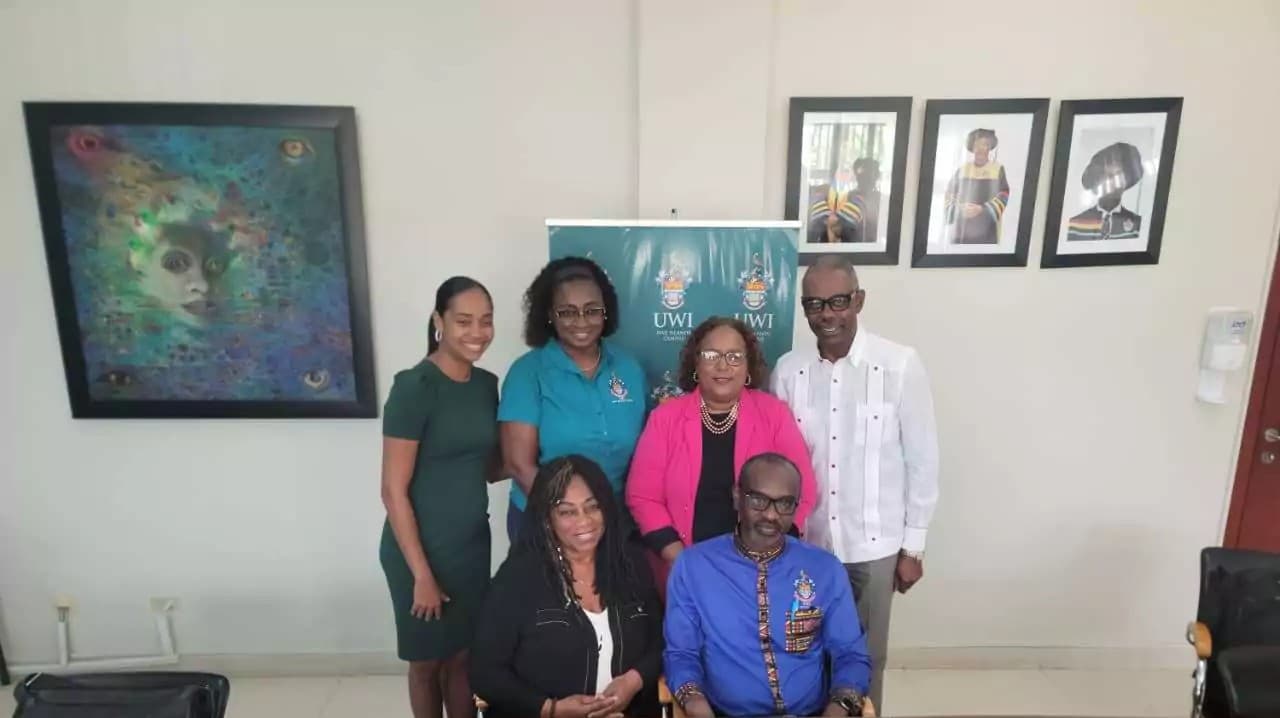
The University of the West Indies (UWI) Five Islands Campus and Canada's University of Toronto have wrapped up a three-week academic exchange that officials from both institutions say marks the start of a lasting partnership in teaching, research and student mobility.
The inaugural programme brought a cohort of University of Toronto students to Antigua and Barbuda for an immersive course titled "Rethinking Crime, Law, and Power in the Caribbean Region," which examined the region's criminal justice system through the lenses of colonial history, race, law and contemporary social issues.
Beyond classroom lectures and panel discussions, the visiting students made educational visits to Parliament, His Majesty's Prison and the Boys Training School, gaining firsthand exposure to governance, law enforcement and criminal justice in Antigua and Barbuda.
"The beginning of an enduring collaboration"
Professor Kamari Clarke of the University of Toronto framed the visit as the foundation of a much larger relationship. "Tomorrow marks the final day that our students have been here for three weeks, and those three weeks represent the beginning of what we hope will become an important and enduring collaboration with the UWI Five Islands Campus," she said, crediting Principal Professor Justin Robinson, Campus Registrar Dr Camille Samuel, Professor Harold Lovell, Professor Blake and the wider UWI faculty for their support.
Professor Robinson said the initiative fits the young campus's ambition to deliver globally competitive education without leaving the region. "We are grounded in the Caribbean, but our aspirations are global," Robinson said. "We want to offer Caribbean citizens a world-class education right here in their backyard."
Confronting the "Triple C Crisis"
The principal argued that international partnerships are vital both for exposing Caribbean students to global academic experiences and for drawing international scholars to study the region's development challenges. He pointed to what he calls the Caribbean's "Triple C Crisis" — climate change, chronic non-communicable diseases and crime — as areas where international collaboration and cutting-edge research are urgently needed.