"When I was in office, the Americans came to me. They said we want you to take third-country deportees — nationals whom we are deporting… not from St. Vincent, but from somewhere else, not from America," he said, explaining that the individuals in question had committed criminal offences in the United States, and that Washington also floated sending persons who had been granted refugee status.
His answer, on both counts, was no.
"You Could Be Sending Me a Psychopath"
On the refugee question, Dr. Gonsalves said the proposal collapsed on first principles of international law.
"You can't send me people who are refugees, because once they're refugees, you under international law have given them refugee status. You have to keep them. You can't give refugee status and then want to send them to me," he said.
On criminal deportees, the former prime minister pointed to a problem Vincentians — and Antiguans and Barbudans — know all too well: the United States' chronic failure to supply meaningful background information even on the region's own nationals when it deports them home.
"If I try to get information — and I tried; give me the antecedents, give me the history of this individual — I don't get the history of the individual. So, you could be sending me a psychopath," he said. "He comes back to St. Vincent. I have to integrate this man back in," he added — and by the time a government discovers what it has actually received, the damage may already be done.
If Washington will not share the files of a small state's own citizens, Dr. Gonsalves reasoned, there is no basis to trust that it will do so for strangers with no connection to the country at all.
"Tick a Box": Small Islands as Diplomatic Props
Dr. Gonsalves said he told the Americans directly that the scheme was not in the interest of either side. "Listen to me, it's not in your interest and it's not in my interest," he recalled telling the US officials.
"If you even send me five criminals a year, all you'd be doing is ticking a box, because you have several thousands of them," he said, arguing that the true objective was to use small Caribbean states as leverage against larger nations: "You only want to tick the box and send five and ten [so you can] tell the fellas in Latin America, 'Look, these nationalist governments take five; they take ten. You can take 10,000.'"
And even those small numbers, he warned, compound. Five or ten a year, year after year, in a micro-state, is not a rounding error — it is a spiraling demographic and security transformation.
"They could mash up my country — and you think it's one Haiti you have? You can have multiple Haitis. So, this is not in your interest," he said, before delivering the line that defines his position: "And I am not taking them."
The warning echoes remarks Dr. Gonsalves made earlier this year on Observer Radio, where he cautioned that a handful of high-risk arrivals could link up with criminal networks across the sub-region and that "Instead of having one Haiti, you may have six others." In that interview, he disclosed that US officials approached him about three months before St. Vincent's election, and urged Caribbean leaders to pursue well-structured engagement with senior American decision-makers rather than yielding piecemeal.
"Why Don't You Send Some Computer Scientists?"
Perhaps the most cutting portion of Dr. Gonsalves' account was his challenge to the fundamental asymmetry of the arrangement — a superpower that recruits the Caribbean's finest minds while proposing to offload its most unwanted.
"Explain to me why you want to send your dregs to me? Why don't you send some computer scientists? You're best and brightest. Why don't you send some of those to me?" he said he asked the US delegation. "How can you want to take mine — the best of what I have — and you want to send me the dregs from somewhere else? I said, 'No, man, I can't do that.'"
He was careful to note that his refusal was not rooted in hostility toward Washington: "I would not have ever allowed them to do that to my country, but it does not mean that I don't admire the American civilization."
PM Browne's Very Different Road: A Secret MOU and a Moving Cap
The Gonsalves doctrine — refuse, explain why, and hold the line — sharply contrasts with the course charted by Prime Minister Gaston Browne, who faced the very same request from the very same superpower and chose to negotiate and even expressing willingness to annually accept up to 16 of the TCN deportees.
The record, as this newsroom has documented, is one of concealment and shifting positions. The government's own White Paper confirmed that the Browne administration signed an MOU with the United States on December 19, 2025 — a fact withheld from Parliament and the public for months while the Prime Minister publicly cast himself as resisting American "coercion." PM Browne has since acknowledged that discussions with Washington have been ongoing since August of last year.
The numbers have moved just as quietly. At the OECS Authority summit in Deep Bay in June, the Prime Minister described a cap of ten deportees per year as "non-negotiable" — yet within days his government indicated it was prepared to consider between 14 and 16 annually, a 40 to 60 percent increase announced through the media rather than through any parliamentary process.
The White Paper itself candidly admits the risks: threats to national security and public safety, sovereignty concerns, healthcare and housing pressures, the possibility that individuals once landed may prove legally irremovable — and the government's fear of appearing "less cooperative" in Washington's eyes.
When Parliament finally got its say in July, the House approved a resolution framing continued negotiations — with no automatic transfers, case-by-case approval, exclusions for persons with serious criminal records, unaccompanied minors and unresolved asylum claims, and a requirement for complete medical, criminal, biometric and biographical information — while Barbuda MP Trevor Walker abstained. "We have no binding agreement with the United States to date," PM Browne told the House. He has insisted the December MOU creates no obligation and declared that "accepting criminals will destroy our country," saying he would sooner endure US visa restrictions than take violent offenders.
But those restrictions are precisely the pressure point. Antiguans and Barbudans have seen ten-year multiple-entry visas slashed to three-month single-entry — the harshest restrictions in CARICOM — and it was US Secretary of State Marco Rubio himself who announced that the programme exists to relocate "the most despicable human beings... perverts, pedophiles and child rapists" all in an effort to keep America safe. Residents have openly worried that the administration will trade acceptance of such individuals for relief from the imposition of the most stringent visa restrictions imposed by the US on CARICOM countries.
The Questions Prime Minister Browne Must Now Answer
Dr. Gonsalves' account is not merely a Vincentian story. It is a mirror held up to St. John's — and it generates questions the Prime Minister has yet to answer.
If the United States would not give Dr. Gonsalves the "antecedents" of St. Vincent's own returning citizens — leaving him to warn that "you could be sending for me a psychopath" — on what basis does PM Browne believe Washington will deliver complete, verifiable criminal and medical histories for foreign nationals it barely knows, when the White Paper itself concedes such records will come only to the extent known or available to US authorities?
If, as Dr. Gonsalves says, the exercise is "ticking a box" to pressure Latin America into taking thousands, does the Prime Minister accept that Antigua and Barbuda's signature would serve principally as a diplomatic prop for Washington — and if so, what does this country tangibly receive in return that justifies that role?
If "five criminals a year" can, in Dr. Gonsalves' arithmetic, "mash up" a small state over time, what would happen to Antigua and Barbuda if the Browne administration accepts the 14 to 16 per year the government proposed? Is that figure annual and open-ended? Has any assessment been done of what a decade of such intakes means for a nation already gripped by rising violent crime?
If Dr. Gonsalves could refuse on international refugee law grounds — "you can't give refugee status and then want to send them to me" — what independent legal advice has the Browne administration obtained on the White Paper's own admission that some individuals, once here, may never lawfully be removed?
And the question that towers above the rest: St. Vincent and the Grenadines, a state of comparable size and comparable vulnerability, simply said no.
Dr. Gonsalves said it to American officials' faces, three months before an election, and stood his ground. Why could Antigua and Barbuda not do the same? Why was an MOU signed on December 19, 2025, and the nation was kept in the dark about it for over half a year?
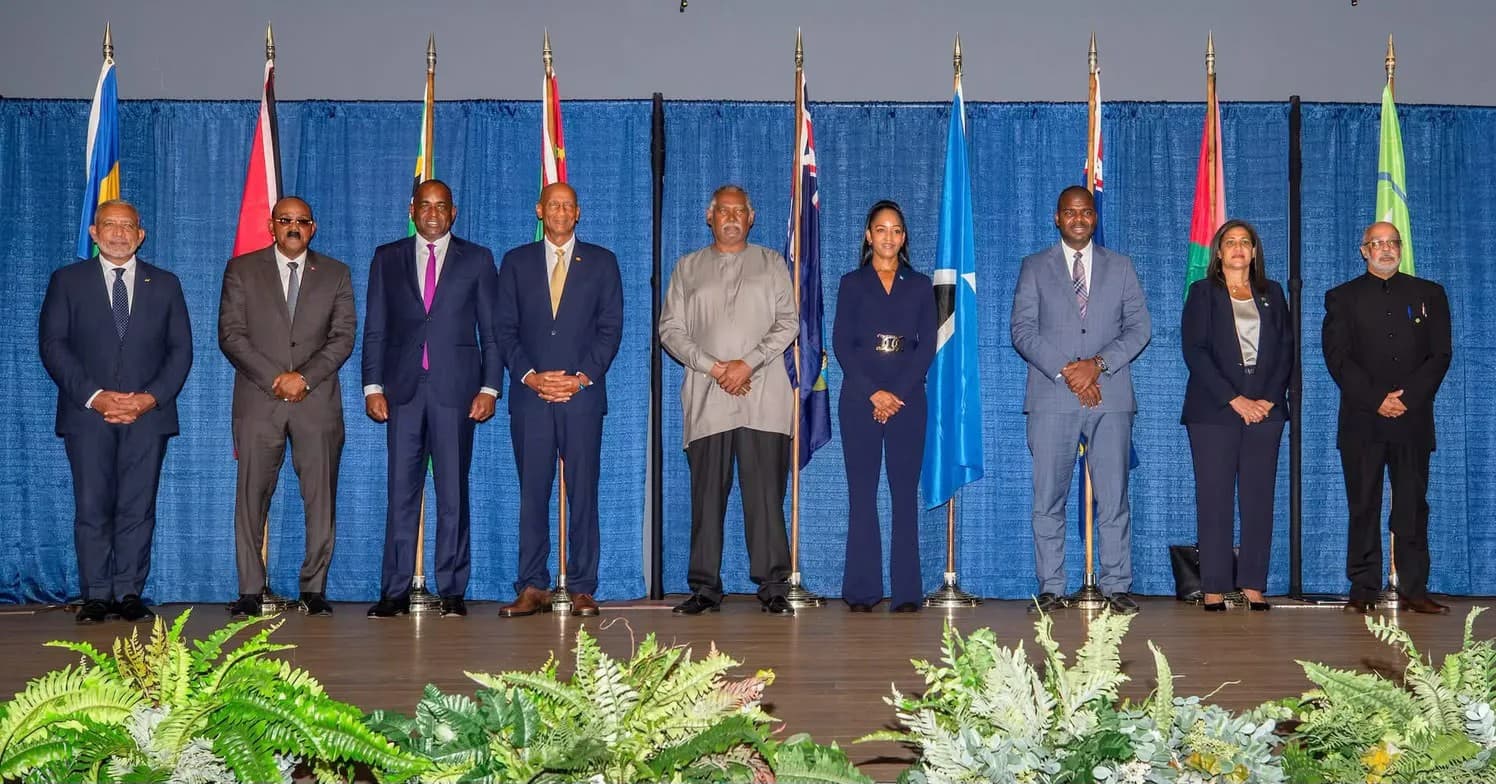
Finally, Dr. Gonsalves has urged the region's leaders to hold the line together. MP Trevor Walker has asked whether TCNs placed here would be free to travel to other OECS countries — "Are they free to travel from Antigua and Barbuda to Montserrat? " — under OECS free movement, and Opposition Senator Jonathan Wehner has pressed the same sovereignty and constitutional questions in the Upper House. Given that PM Browne chairs the OECS Authority, will he now champion the single, collective Caribbean position that Dr. Gonsalves' example proves is possible — or continue negotiating alone with a superpower that, in the former Vincentian prime minister's words, wants to take the region's "best and brightest" while sending back its "dregs" ?
Until those answers come, Dr. Gonsalves' words hang over the entire TCN negotiation:
"No, man, I can't do that.
I am not taking them.
I would not have ever allowed them to do that to my country."
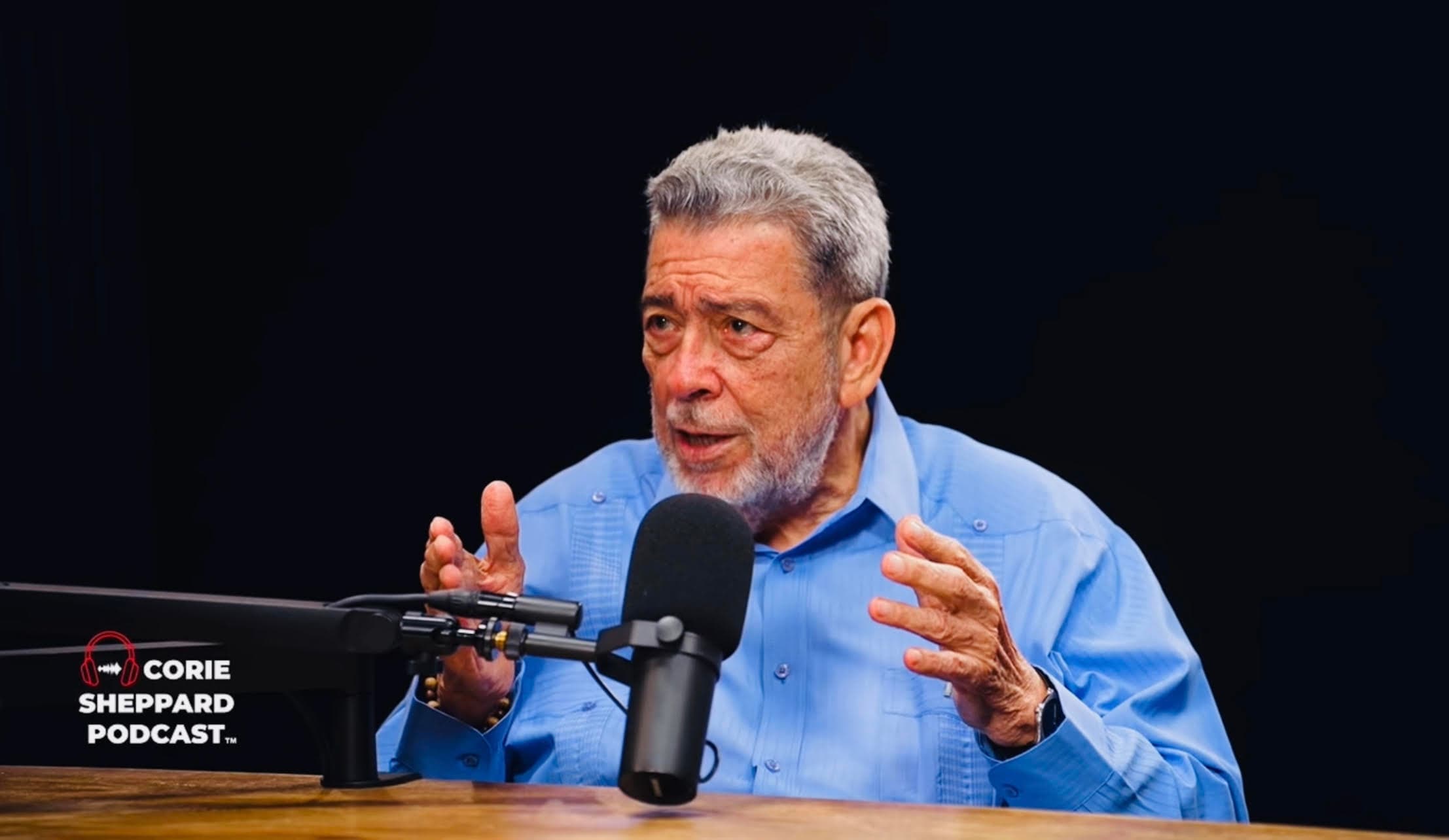
Source notephoto from the Corie Sheppard Podcast