A Barbudan environmentalist and community activist is carrying the fight for his island’s centuries-old communal land system far beyond the shores of the Caribbean — and the world is listening.
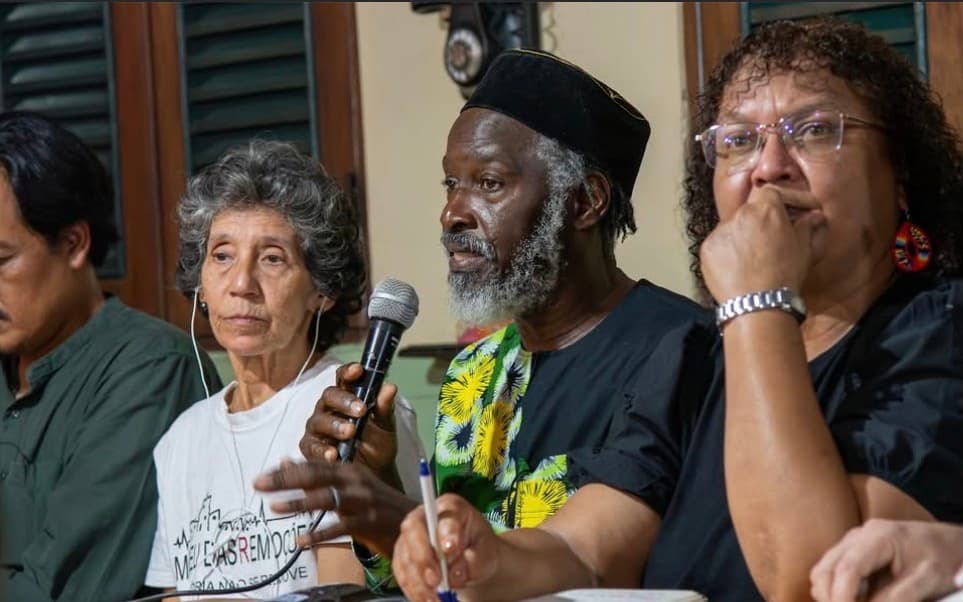
John Mussington, of the Barbuda Land Rights and Resources Committee, visited Rio de Janeiro in April 2026 for the 2026 Global Community Land Trust Peer Exchange, organised by Brazil’s Favela Community Land Trust Project and invited by Minnesota’s Rondo Community Land Trust and the International Center for Community Land Trusts, with support from the Robert Wood Johnson Foundation. The week-long event brought together community leaders from across the globe to exchange ideas on collective land stewardship and strategies for confronting real estate speculation and displacement.
A marine biologist by training, Mussington became an activist through conducting environmental impact assessments across Antigua and Barbuda, where he witnessed the environmental destruction tied to tourism and luxury development projects. Since Hurricane Irma hit Barbuda in 2017, he has spoken widely against efforts to privatize Barbudan land and transform the island into a luxury real estate market.
“We Belong to the Land”
At the heart of Mussington’s message is a philosophy that stands in direct opposition to the Western real estate model. He explained that as a Barbudan, once a person reaches 18, land is available by right — for residential, agricultural, and commercial purposes — without the need of a bank or mortgage. Agricultural land, once no longer in use, returns to the communal pool.
“With our African ancestry, like many Indigenous peoples, we did not have this concept that you own land as a commodity to buy and sell. The concept that we have is that we are part of the land. We use the land to sustain ourselves. We belong to the land. The land belongs to us,” Mussington said.
He drew parallels between Barbuda’s land system and those practiced by Indigenous and maroon communities across the region, noting that the Kalinago in Dominica, the Maroons in Jamaica, and the Saramaka people in Suriname all share similar traditions of collective stewardship.
Disaster Capitalism After Irma
Mussington described what unfolded after Hurricane Irma devastated Barbuda in 2017 as disaster capitalism in action. Barbudans were evacuated from the island and while they were away, the central government in Antigua began publicly dismissing communal land ownership. The disaster provided an opportunity to repeal the Barbuda Land Act and embark on a process of redeveloping Barbuda into a private island serving primarily the wealthy. Prime Minister Gaston Browne publicly admitted plans to create a luxury real estate market, saying Barbuda would become “a Jumby Bay on steroids.”
Mussington argued that Barbuda’s communal system was precisely what allowed the island to survive the hurricane with only one casualty. Houses were strongly built because resources went into superior building materials rather than mortgage payments. Mangroves, beaches, and coral reefs remained intact and healthy because they were collectively owned, creating natural protection systems that absorbed the storm’s impact.