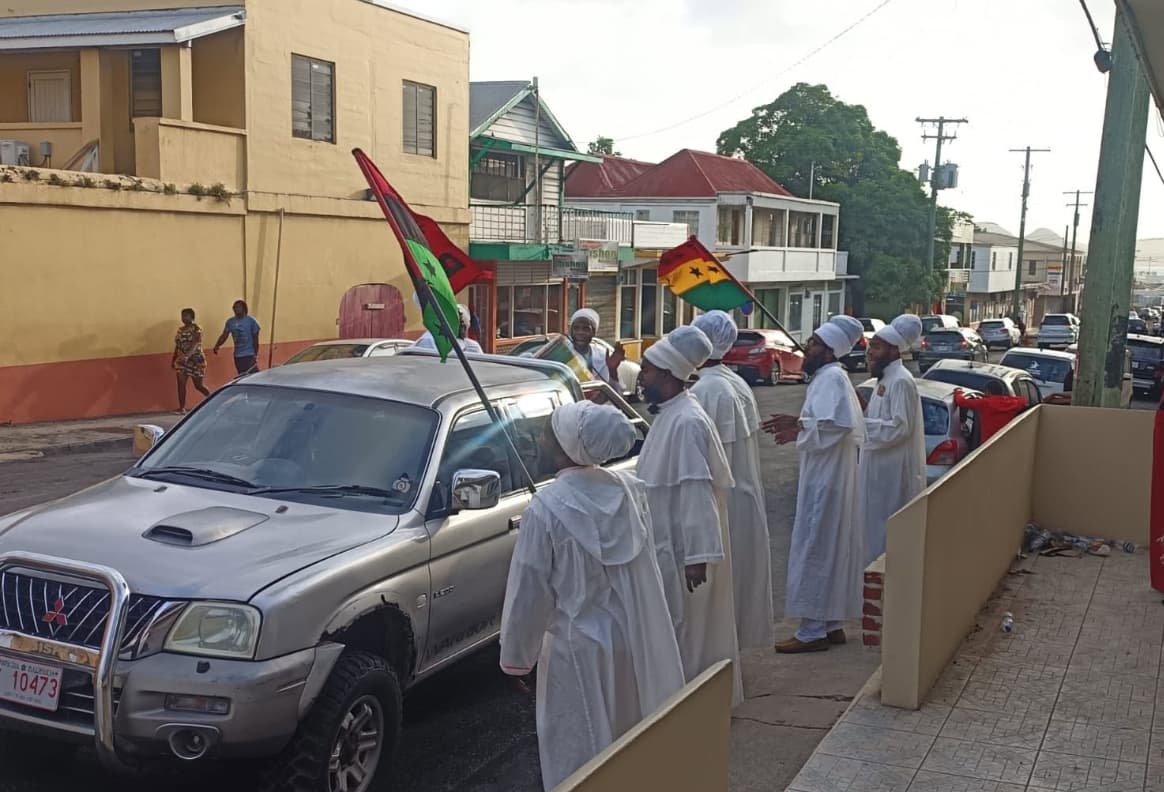
Dressed in white and carrying Rastafarian flags, members of Antigua and Barbuda's Rastafarian community brought their call for cannabis law reform to the gates of authority on Saturday, staging a peaceful protest outside the St. John's Police Station in a direct appeal to end the imprisonment of individuals for minor marijuana-related offences.
Demonstrators urged authorities to take a different approach to minor cannabis offences, arguing that current enforcement practices are out of step with ongoing discussions about drug law reform across the Caribbean. Protesters said some individuals remain incarcerated for marijuana offences despite growing support across the region for decriminalisation and greater recognition of cannabis' religious and cultural significance within the Rastafarian faith.
A Review of the Law — Not an End to Enforcement
The group appealed for a review of existing laws, maintaining that imprisonment should not be the primary response to minor marijuana-related offences. Organisers described the demonstration as part of a broader campaign for legal reform and greater recognition of Rastafarian rights in Antigua and Barbuda.
The protest is being held against the backdrop of a legal framework that has already seen some movement. Antigua and Barbuda decriminalised the possession of up to four trees and fifteen grams of cannabis in recent years — a shift that, according to some observers, should already have reduced the number of individuals facing custodial sentences for minor marijuana possession. The Rastafarian community's protest suggests that, in practice, enforcement has not fully reflected that legislative shift.