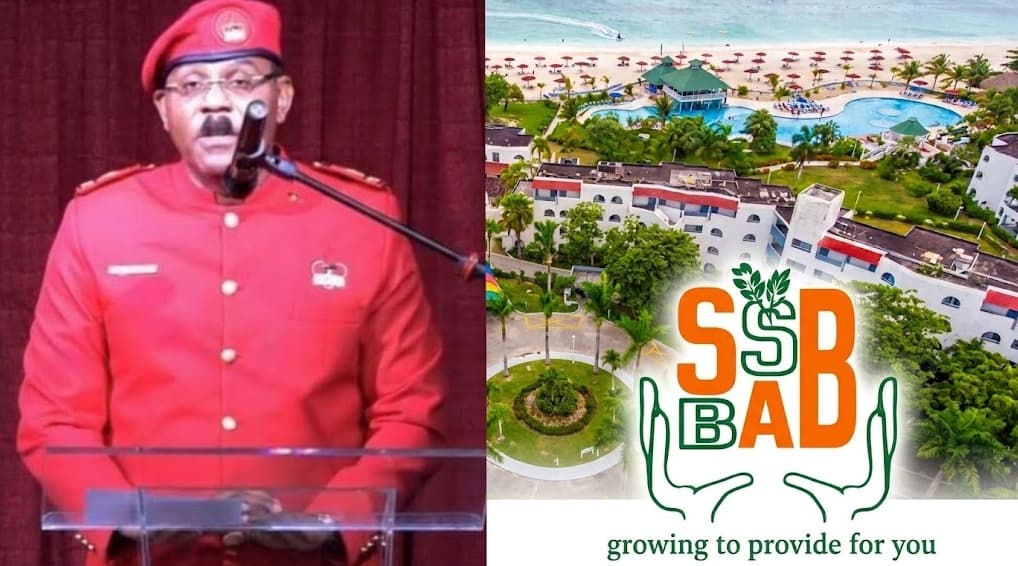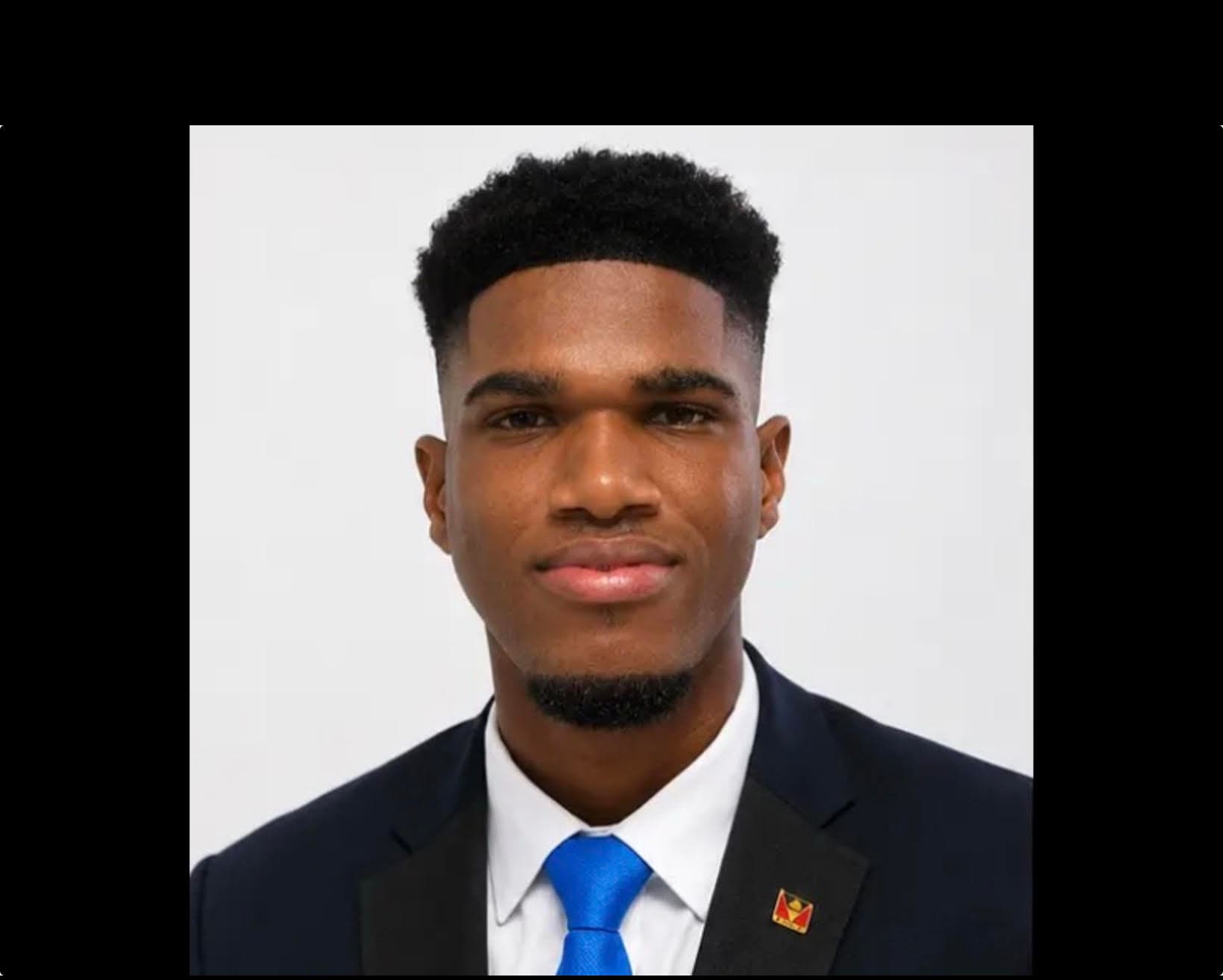
Every beach in Antigua and Barbuda belongs to the people "without question, without discrimination, without exception" and the people's fighting spirit in their refusal to surrender that right is the same spirit that forced Prime Minister Gaston Browne to shelve his plan to vest the Jolly Beach Resort in the Antigua and Barbuda Social Security Board (ABSSB). That was the through-line Senator Jonathan Wehner drew on Monday, 5th October, on Connecting with Dave Lester Payne on Observer Radio 91.1 FM, hosted by Algernon "Serpent" Watts, as he recounted his own prosecution — one of several citizens who faced jail time for accessing a public beach — and dissected the Prime Minister's grudging admission in Parliament that "all of the noise" killed the Jolly Beach transfer.
"This is a matter of serious concern," Senator Wehner told listeners. "I myself was before the court facing jail time, because the government tried to say that I trespassed on a public beach. And we all know in this country, according to the Physical Planning Act, Section 50, Subsection 1, that all beaches in Antigua and Barbuda are public, meaning I cannot trespass on the beach."
The senator's account wove together three threads: the law that makes every beach public; the politically driven prosecution that tried to criminalise citizens for exercising that law; and the half-century pattern — from Halcyon in 1976 to Jolly Beach in 2026 — of ALP governments reaching into the Social Security fund to buy hotels. His conclusion on the last point was unequivocal: "We say no to Jolly Beach, and we say no to whatever foolishness he [PM Browne] will come with to put our Social Security money in jeopardy ever again."
"Every Beach in This Country" — What the Law Actually Says
Senator Wehner returned repeatedly to the statute he says the government chose to ignore. "The Physical Planning Act — that's the law. Section 50, Subsection 1 guarantees that every beach in this country is to be accessible to the public. Guarantees that without question, without discrimination, without exception," he said. And where only one landward access route to a beach exists, he added, the law protects it: "According to the law, if there is only one landward access to the beach — the traditional landward access — then that is supposed to be accessible to the public. So, we followed the law."
The discussion was sparked in part by events in the Bahamas, where Lincoln Bain, the leader of the Coalition of Independents, was recently detained by police for pulling down a fence that blocked beach access — a fence reportedly extending into the sea, which a visitor had tried to swim around before being swept out and requiring CPR. No sooner was he released, Watts recounted, than Bain went straight back to the beach to finish the job.
Senator Wehner's reaction was three words: "As he should."
When Watts played devil's advocate with the prospect of beachfront being declared "private property," the senator cut it off flatly: "Well, that can't be the case … No beach is private property."
The Lorry Bay Patriots — A Cabinet-Backed Prosecution that Collapsed Due to its Vacuous Foundation
The senator then relived the saga that gave him what Watts jokingly called his "rite of passage." On Whit Monday of last year (2025), members of the public and of the United Progressive Party (UPP) visited several beaches across the island where public access had been obstructed — among them Laurys Bay, near Willikies, where the traditional landward access was the only way in.
What followed, Senator Wehner said, moved with remarkable speed for a n administration that claims it lacks resources to investigate its own scandals. "The Whit Monday was the beach-a-cade event. The Wednesday, he [the private developer at Laurys Bay] was at Cabinet saying that he wants the government to bring charges [against Antiguans] for trespassing. The Thursday … the Director General of Communications, Mr. Maurice Merchant, came out to the public and said that Cabinet wholeheartedly supports this private developer," he recounted, noting that the developer who owns the lands around Lorry Bay is not Antiguan. "The Cabinet supported a white European by bringing charges against Antiguans for accessing a beach."
"It was political victimisation. It was the politicization of our justice system," Senator Wehner declared. "Any officer of the law who does just a cursory glance of the law sees there's no case here, none whatsoever. There's an access to the beach. It's the only access. Therefore, the public have to be able to use it."
Several citizens were summoned before the Magistrate's Court — among them the senator himself, George Wehner, attorney Leon "Chaku" Symister, Pearl Quinn-Williams, Alister Thomas, Shawn Nathaniel, Jewel Broodie, Jason Mannix and several others. Astonishingly, Senator Wehner noted, the prosecution's net was cast so carelessly that it caught people who were not even there: "There were individuals who were not even at the event who were summoned. You're charging people who weren't even present at the event in question. Total incompetence. Total lack of any substance, any foundation in the law."
The case then rotted on the vine. The defence — a team Wehner credited that included attorneys-at-law Sherfield Bowen then MP for St. Philip's South, Kendrickson 'Kenny' Kentish KC, Sherrie-Ann Bradshaw and former Attorney General Justin Simon KC — demanded, again and again, the disclosure the law requires. "Once charges are brought against an individual, you as the defendant have to be supplied with what you've been charged with and the details… Weeks, months went by. The prosecution couldn't bring anything to our legal team," he said. Even after the Director of Public Prosecutions personally stepped in after "all this pontification in the Magistrate's Court" what was finally submitted, in Senator Wehner's words, "was not worth the paper it was written on."
The stakes, he insisted, should never be forgotten: "Citizens of this country, locally born Antiguans, were facing jail time because the government was supporting a white European in that individual's attempts to deny those locals … from accessing beaches, which are made public according to the law."
Three Buses, Vehicle Gate, and Who the State Chooses to Prosecute
For Senator Wehner, the Laurys Bay prosecution sits inside a longer pattern of what he called the politicization of the justice system. The same machinery turned on broadcaster "Serpent" Watts himself, on Dame Gisele Isaac and others all while the state pleads poverty when its own conduct demands litigation, investigation or inquiry.
"When the Prime Minister says that we can't have inquiries into certain matters, such as Vehicle Gate, because that's wasting the public's time and money, what happened to wasting the public's time and money for the three old buses, when they frivolously brought the case against Harold Lovell, Jacqui Quinn and Wilmoth Daniel for years? For three buses!" he said, referring to the marathon prosecution of the three former UPP ministers that ended in acquittal.
"You have over $15 million of taxpayers' resources gone because people illegally used our money — your Education Levy, Medical Benefits, Social Security, ABST, you name it they used it to get vehicles for their own use. And there's no time, there's no resources to investigate those things," the senator continued. "But you have time and resources to bring citizens before the court for accessing a public beach. You have resources to put Serpent and others in a prison cell and to bring foolish cases, frivolous cases, against him."
Then, with a wry glance at his own file: "I don't understand against me? I look like a threat to somebody? Me?"