Edition
Real News Antigua & Barbuda
Breaking
Browne Administration Increases Third-Country US Deportees Acceptance Number to 14-16 /Browne Administration Increases Third-Country US Deportees Acceptance Number to 14-16 /

Electricity Bills Set to Rise for the Second Time since the April Election as APUA Increases June Fuel Variation Charge to 80 Cents per kWh

Editorial Staff
Editorial StaffReal News Editorial Team
3 min read
ShareXFacebookWhatsApp
IMG_1657

Households and businesses across Antigua and Barbuda will see higher electricity bills this month after the Antigua Public Utilities Authority raised its fuel variation charge to its highest level so far in 2026.

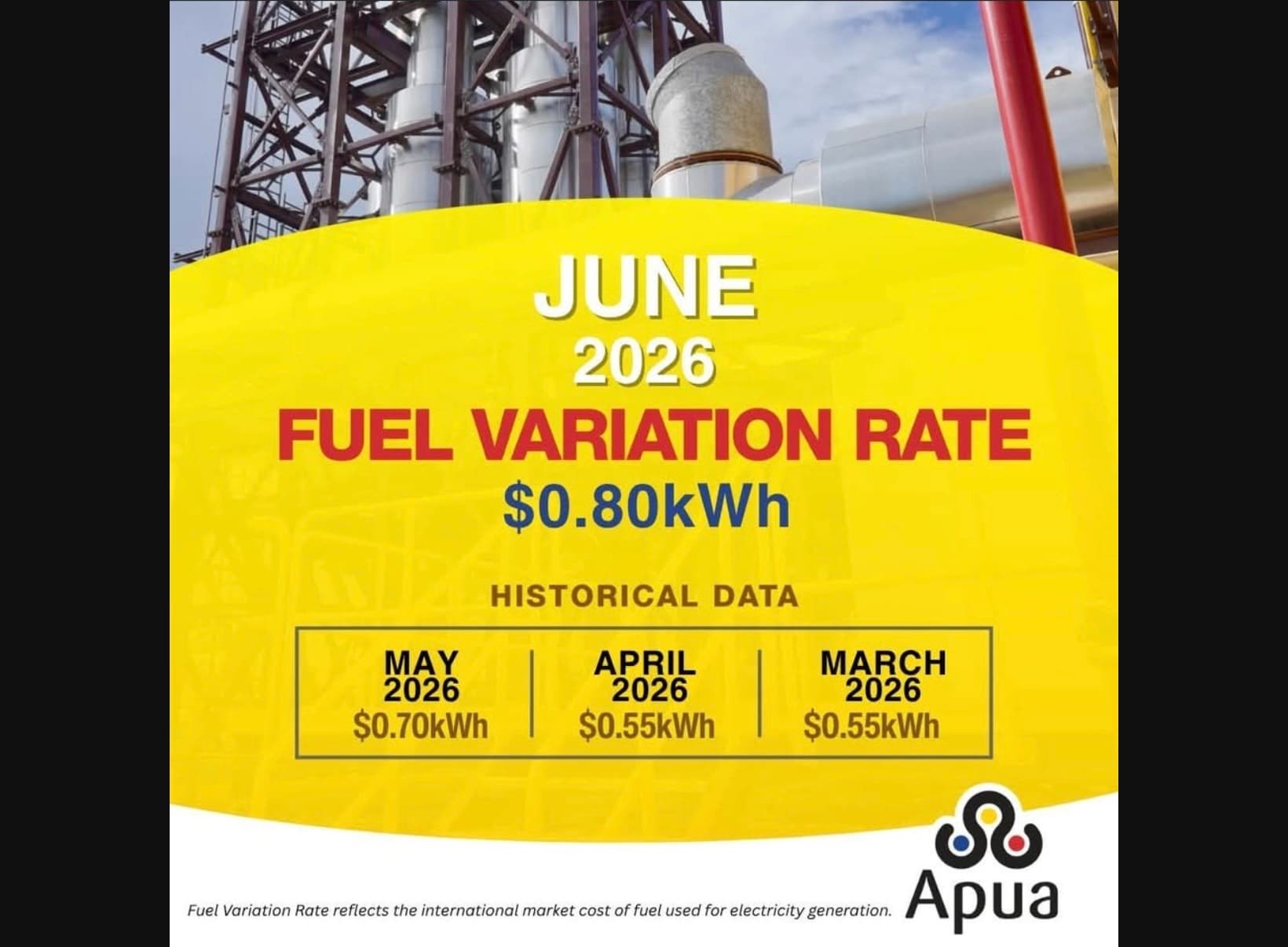
Electricity customers will pay a higher fuel variation charge in June after APUA increased the rate from 70 cents to 80 cents per kilowatt-hour. The new rate represents a 10-cent increase over May and follows rates of 55 cents per kilowatt-hour in both March and April, according to figures released by the utility.

The sharp upward trajectory — from 55 cents in March and April, to 70 cents in May, to 80 cents in June — represents a 45% increase in the fuel charge component of electricity bills in the space of just three months, placing additional pressure on households already grappling with the cost-of-living increases documented in the April 2026 Consumer Price Index report.

What is the Fuel Variation Charge?

APUA said the fuel variation rate reflects the international market cost of fuel used to generate electricity and is influenced by global fuel prices. The fuel variation charge is a component of customers’ electricity bills and fluctuates based on fuel costs associated with power generation.

The charge is a pass-through mechanism that allows APUA to adjust bills in line with the cost of the diesel and heavy fuel oil used to run its generating plants. When global oil prices rise, the charge goes up — and the full impact is borne directly by consumers.


Advertisement

Article mid

APUA Urges Conservation

The utility encouraged customers to monitor their energy consumption and adopt energy-efficient practices at home and in the workplace to help manage electricity bills.

Practical measures that can help reduce consumption include switching off lights and appliances when not in use, replacing older air conditioning units with energy-efficient models, setting air conditioning thermostats to higher temperatures, using fans where possible, and reducing the use of high-draw appliances such as electric stoves, dryers, and water heaters during peak hours.

The June increase arrives at a difficult moment for the island’s energy sector. APUA is already dealing with the aftermath of a major fuel leak confirmed at its former Friars Hill facility — an incident that drew a multi-agency environmental response last week and whose long-term costs remain to be assessed. For ordinary consumers, the combination of a fuel leak at the utility’s premises and a rising fuel surcharge on their electricity bills is unlikely to sit easily.

Comments

Leave a comment

Comments are moderated before appearing.

Weekly Digest

Stay ahead of every story that matters.

Every Monday morning — the week's most important news from Antigua & Barbuda and the Caribbean, delivered straight to your inbox.

  • Breaking news & top stories
  • Politics, crime, business & sport
  • Free — unsubscribe any time

No spam. One email per week. Unsubscribe any time.

or
Join our WhatsApp group

About the author

Editorial Staff
Editorial Staff

Real News Editorial Team

Real News Antigua and Barbuda editorial team.

Advertisement

Leaderboard ad

Related articles

Advertisement

M Banner
Join our WhatsApp