Edition
Real News Antigua & Barbuda
Breaking
With two increases in the fuel variation charge since the April election PM Browne hints at INCREASING both the water rates and fuel prices/Kishroy Harry Pleads Guilty to All Charges in Hit-and-Run that Injured Cyclist Tahje Browne/With two increases in the fuel variation charge since the April election PM Browne hints at INCREASING both the water rates and fuel prices/Kishroy Harry Pleads Guilty to All Charges in Hit-and-Run that Injured Cyclist Tahje Browne/

Browne Administration Raises Deportee Acceptance Number to 14-16 but No Parliamentary Vote, and Public Asks: Who Exactly Are We Accepting?

Editorial Staff
Editorial StaffReal News Editorial Team
5 min read
ShareXFacebookWhatsApp
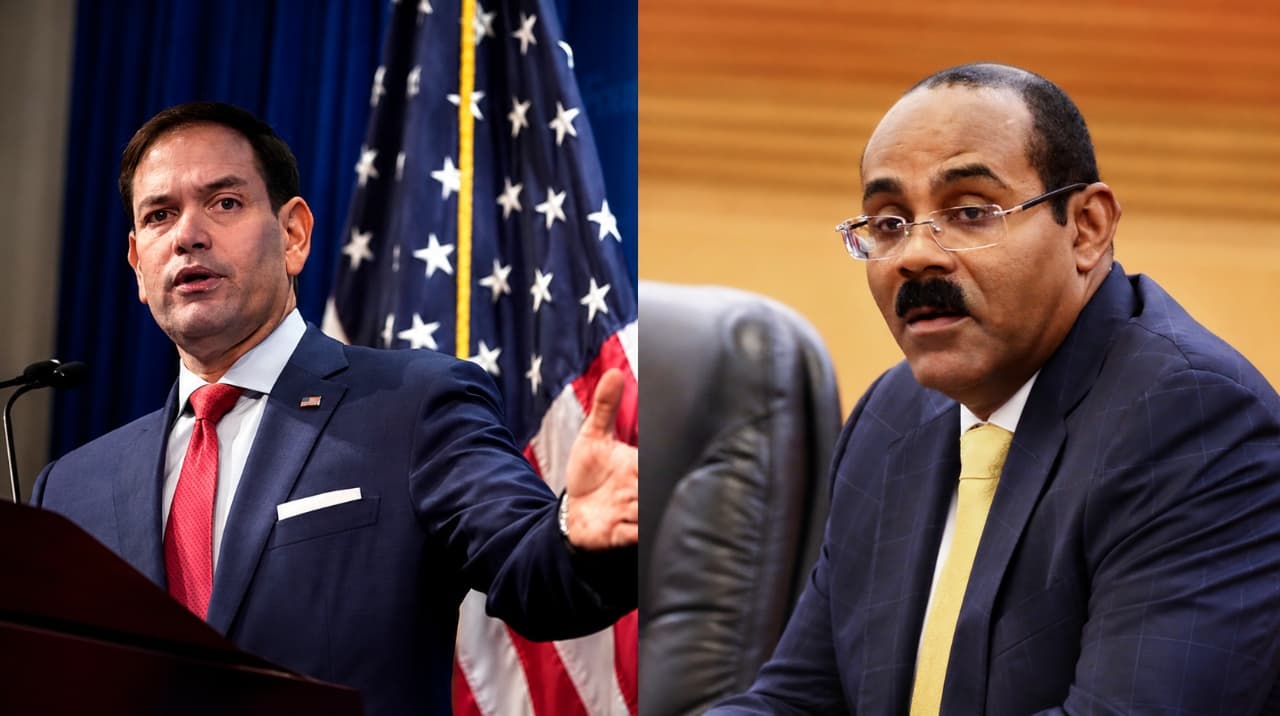
rubio and gaston

The Gaston Browne administration has raised the number of US third-country deportees it is prepared to consider accepting — from the ten per year Prime Minister Browne announced publicly just days ago, to between 14 and 16 annually — as negotiations with Washington continue without any formal agreement, any parliamentary scrutiny, and without the public knowing precisely who these individuals are, where they are from or what crimes they have committed leading to their deportation from the US.

The Numbers Keep Shifting

When Prime Minister Browne spoke to the deportee negotiations publicly at the OECS Authority summit in Deep Bay earlier this week, he framed his government's counterproposal to Washington as a firm cap of ten individuals per year — a limit he described as non-negotiable in the face of what he acknowledged was direct coercion from the United States. The figure has already shifted upward.

The government now says it is prepared to consider accepting between 14 and 16 people annually — a 40 to 60 percent increase over the number the Prime Minister put to the public just days ago. Officials stress that no final agreement has been reached and that every individual would undergo strict security screening, with no one carrying a criminal background permitted entry. Comprehensive checks covering criminal history, security assessments, and health status would be required before anyone is admitted.

The government has also indicated that the United States would provide financial support to assist those relocated, and that Antigua and Barbuda would retain the final say over who enters and resides in the country.

What Secretary Rubio Said — And Why Residents Are Worried

The government's assurances about screening have not satisfied a public that has been listening carefully to what American officials are actually saying about this programme.

In a widely shared video clip from a White House interview in April 2025, US Secretary of State Marco Rubio explained that the Trump administration was working with other countries to send them "some of the most despicable human beings — as a favour to us," specifically identifying the obligation to keep the American people safe from what he described as "perverts and pedophiles and child rapists."

With that context firmly in mind, some residents say they are not optimistic about the Prime Minister's assurances that Antigua and Barbuda will not accept such offenders. They are asking specifically which entities and what measures would actually be used to screen out these individuals — and whether Antigua and Barbuda's security apparatus has the capacity to conduct the kind of deep vetting that such a screening process would demand.

The Visa Pressure Behind the Deal

The context for the negotiations is unmistakable. Antiguans and Barbudans are currently facing restrictions and bonds for several classes of US visitor and immigrant visas. With a July 1 review of this status looming, residents fear the Browne administration will yield to US pressure in order to have the visa restrictions reversed — putting the local population at a different type of risk.

In other words, the choice being presented is stark: accept deportees the US describes as "the most despicable human beings" or face continued restrictions on granting of American visas for Antiguan and Barbudan nationals seeking to travel, study, and visit family in the United States.


Advertisement

Article mid

Concerns About Crime and Community Safety

Violent crime is already on the rise in Antigua and Barbuda, with chain-snatchings, home invasions, break-ins and stabbings dominating headlines in recent weeks. The prospect of importing what Secretary of State Rubio described as "despicable human beings" is a daunting one for people already living with heightened fear.

The Prime Minister has said deportees should bring skills that would make them financially independent and contributors to the economy rather than reliant on public services. But residents note that unemployment remains a challenge — particularly for youth — and that this requirement alone offers no guarantee of who might actually arrive.

One resident, a retired civil servant, pointed to the movement of hundreds of West African nationals from Antigua into US territory in recent years as evidence that physical presence in the country does not equal permanent containment. "If 900 of them could slip away into American territory, how hard can it be for 14?" he asked.

Still No Parliamentary Debate or Vote

As with the earlier revelations about the deportee negotiations, the government's updated position has emerged through media interviews and post-summit disclosures — not through any formal parliamentary process.

No proposal from the United States has been tabled before the House of Representatives. No agreement has been put to Parliament for debate. No committee of legislators has been given the opportunity to scrutinise the terms, the screening mechanisms, the financial arrangements offered by Washington, or the legal status of any individuals who might eventually be placed in Antigua and Barbuda.

This is in pointed contrast to Jamaica, which brought its Memorandum of Understanding with the United States — accepting up to 25 refugees every two weeks — before its Parliament for formal consideration. Jamaican legislators were given the opportunity to see and debate what their government had agreed to. Antigua and Barbuda's Parliament has been given no such opportunity.

The people of Antigua and Barbuda are being asked to trust PM Gaston Browne's judgement on one of the most sensitive sovereignty and public safety questions the nation has faced — without Parliament, the people's representatives, having the opportunity to scrutinise a single document, hear a single witness, or cast a single vote.


Comments

Leave a comment

Comments are moderated before appearing.

Weekly Digest

Stay ahead of every story that matters.

Every Monday morning — the week's most important news from Antigua & Barbuda and the Caribbean, delivered straight to your inbox.

  • Breaking news & top stories
  • Politics, crime, business & sport
  • Free — unsubscribe any time

No spam. One email per week. Unsubscribe any time.

or
Join our WhatsApp group

About the author

Editorial Staff
Editorial Staff

Real News Editorial Team

Real News Antigua and Barbuda editorial team.

Advertisement

Leaderboard ad

Related articles

Advertisement

M Banner
Join our WhatsApp