Edition
Real News Antigua & Barbuda

United Kingdom's Shortest-Serving Labour Prime Minister: Sir Keir Starmer Resigns After Two Turbulent Years

Editorial Staff
Editorial StaffReal News Editorial Team
4 min read
ShareXFacebookWhatsApp
keir starmer announces resignation

Sir Keir Starmer has resigned as Prime Minister of the United Kingdom, ending a turbulent tenure less than two years after he led the Labour Party to one of its most commanding general election victories in modern history — and making him the shortest-serving Labour prime minister on record.

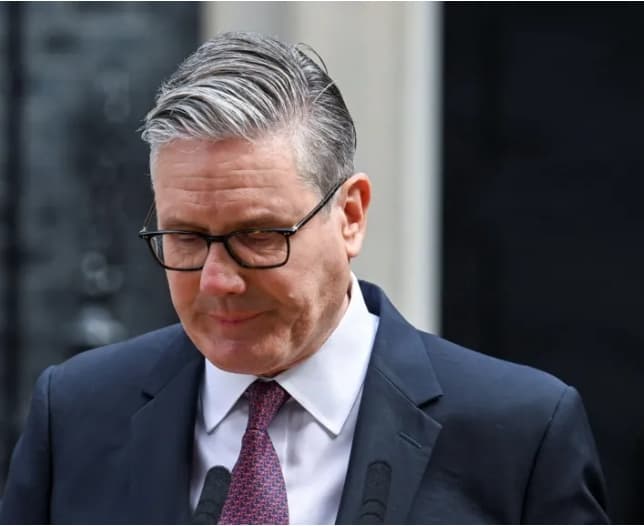
Starmer made the announcement in an emotional address outside Number 10 Downing Street on Sunday morning, telling the waiting cameras that he had accepted he no longer commanded the confidence of enough Labour Members of Parliament to lead the party into the next general election.

"I have heard the answer of my parliamentary party… and I accept that answer with good grace," he said, adding that walking up Downing Street two years ago was the proudest moment of his life. He also confirmed: "Every decision I have taken has been about putting the country I love first."

A Collapse Built Over Months

Starmer entered Number 10 in July 2024 with a commanding parliamentary majority and a promise to restore stability after years of Conservative turmoil, but his decision to resign had become almost inevitable, shaped by a cascade of political crises and a revolt within his own party.

The breaking point came with Labour's performance in local elections, which proved catastrophic. The party lost around 1,500 council seats and more than 25 councils, haemorrhaging support to Nigel Farage's Reform UK in traditional Labour heartlands and to the Greens in major cities — results widely interpreted as a public repudiation of Starmer's leadership and direction.

The electoral fallout triggered a wave of ministerial resignations and intensified calls from senior Labour MPs for Starmer to step aside. Even within his cabinet, confidence had eroded.

A Series of Self-Inflicted Wounds

The decline was not solely the product of external pressures. A series of self-inflicted controversies — most notably the appointment of Peter Mandelson as UK Ambassador to the United States despite his links to Jeffrey Epstein — damaged Starmer's credibility and alienated key figures within Labour. The backlash led to senior aides quitting and intensified scrutiny of his judgement.

Foreign policy tensions also played a role. A public dispute with President Donald Trump over the UK's stance on military operations against Iran painted Starmer as indecisive, with focus groups describing him as "weak" and "reactive," further eroding public confidence.

Domestically, disagreements over defence spending and welfare reform deepened rifts within the party, and senior ministers accused Starmer of failing to provide adequate funding for the armed forces, prompting further resignations.


Advertisement

Article mid

An Orderly Transition Planned

Starmer confirmed he had informed King Charles III of his intention to resign and asked Labour's National Executive Committee to set out a leadership timetable, with nominations opening on July 9 and a new leader expected to be in place before Parliament returns in September. He said he would remain in office to ensure what he described as an orderly transition of power.

The Race to Succeed Him

Labour now faces a pivotal leadership contest, with Greater Manchester Mayor Andy Burnham widely expected to enter the race, and senior figures Wes Streeting and Yvette Cooper also mentioned as potential contenders. Whoever wins will become the UK's next Prime Minister — the seventh in just ten years — and inherit a party fractured by internal disputes and a country impatient for change.

Because Labour retains its parliamentary majority, a general election is not automatically required. However, Nigel Farage has already demanded one, arguing that Labour cannot simply install another politician in Number 10 without seeking a fresh mandate from the British public.

What It Means for the Caribbean

The resignation of the British Prime Minister carries significance for Antigua and Barbuda and the wider Commonwealth Caribbean, which maintains constitutional and diplomatic ties with the United Kingdom. With the Commonwealth Heads Of Government Meeting (CHOGM) 2026 scheduled to take place in Antigua and Barbuda in November — an event at which the UK head of government would ordinarily play a prominent role — the Labour leadership transition adds a layer of uncertainty as to who will be the PM that represents the UK.

The new British Prime Minister, whoever emerges from the Labour contest, will be one of the most prominent international leaders to visit the twin-island nation of Antigua and Barbuda later this year.


Comments

Leave a comment

Comments are moderated before appearing.

Weekly Digest

Stay ahead of every story that matters.

Every Monday morning — the week's most important news from Antigua & Barbuda and the Caribbean, delivered straight to your inbox.

  • Breaking news & top stories
  • Politics, crime, business & sport
  • Free — unsubscribe any time

No spam. One email per week. Unsubscribe any time.

About the author

Editorial Staff
Editorial Staff

Real News Editorial Team

Real News Antigua and Barbuda editorial team.

Advertisement

Leaderboard ad

Related articles

Join our WhatsApp