Edition
Real News Antigua & Barbuda

Opposition Leader MP Pringle Rubbishes the PM's Cries of Victimization & Lays Bare the PM's Removal of the Legal Guardrails Originally in the CBI Act

Editorial Staff
Editorial StaffReal News Editorial Team
6 min read
ShareXFacebookWhatsApp
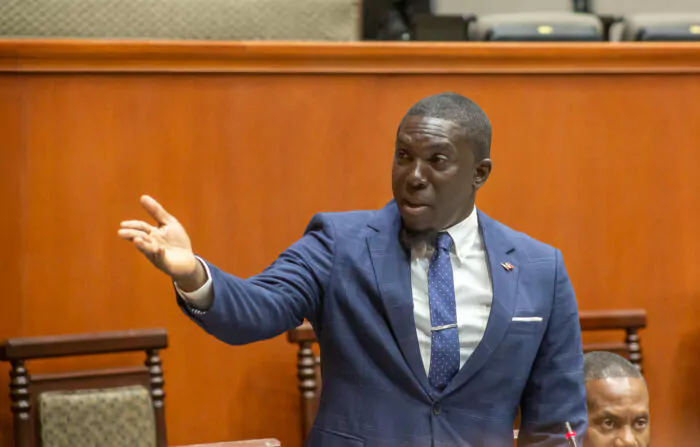
jamale pringle outstretched hand in parliament

As Antigua and Barbuda confronts the most serious threat to its Citizenship by Investment Programme in the programme's history — with the European Union demanding a full phase-out by June 2028 — Opposition Leader Jamale Pringle has laid out in forensic detail the specific legislative changes made by the Gaston Browne administration in 2016 that he says systematically dismantled the safeguards built into the original CIP Act, leaving the programme exposed to the international scrutiny now bearing down on it.

Speaking on Observer Radio's Voice of the People programme on Tuesday, MP Pringle walked the public through four categories of amendments to the Antigua and Barbuda Citizenship by Investment Act, enacted in 2016, that he argues collectively gutted the programme's integrity framework — changes he says the opposition warned against at the time and which have now produced exactly the consequences the international community warned were coming.

Residency Reduced from 35 Days to 5

The original 2014 Act, Section 4, required CIP citizens to spend at least 35 days in Antigua and Barbuda within the first five calendar years after registration, or face deprivation of their citizenship. The 2016 amendment by PM Gaston Browne slashed that requirement to just five days over the same period.

"Clearly that residency requirement — and I can recall that came up in the proclamation by the White House," Pringle said, drawing a direct line between the weakened residency rule and the concerns raised by Washington about the programme. The change effectively transformed the CIP from a programme with at least a nominal expectation that new citizens would maintain a connection to the country, into one where a single visit of less than a week over five years satisfied the legal requirement.

Repeal of Audit Requirement

Perhaps the most consequential change MP Pringle identified was the repeal of Sections 2A through 2K of the original Act — the provisions that governed the application of funds, the finances of the CIP Board, the preparation of accounts, and the annual audit of those accounts by the Director of Audit or auditor approved by the director. Under the original 2014 Act, Section 2J required the accounts of the Board to be "prepared in the form and the time the minister may direct and shall be audited annually by the Director of Audit or any auditor appointed by the Director of Audit." The Gaston Browne administration's 2016 amendment repealed that entire block of provisions. "No longer is the audit requirement built into the act," Pringle stated bluntly.

The implication is staggering. A programme generating hundreds of millions of dollars annually — a programme the Prime Minister himself describes as critical to national development — has operated for a decade without the statutory audit oversight that was built into its founding legislation. The very transparency mechanism designed to tell the public how CIP money was being collected, managed, and spent was legislatively removed by the government that collects, manages, and spends it.

Investment Approval Shifted from the Authority to the Minister

The original 2013 Act, regulation 9, required the Citizenship by Investment Unit (CIU) to consult with the Antigua and Barbuda Investment Authority (ABIA) — the independent body charged with managing and regulating investment in the country — before approving businesses for the purpose of CIP investment.

The 2016 amendment removed ABIA from the process entirely, replacing it with the Minister. "The Investment Authority is charged with the responsibility and the management of investment in Antigua and Barbuda — the GAston Browne administration took that from the agency and put the powers in the hands of the Minister," MP Pringle said.

And who is the Minister? The Prime Minister — who serves simultaneously as Minister of Finance and as the minister responsible for the CIP.

Names and Addresses Removed from Public Reports

The original 2013 Act, regulation13C, required the publication of six-monthly reports containing the names, addresses, and nationalities of all CIP applicants and their dependents. The 2016 amendment stripped the names and addresses from the reporting requirement, leaving only nationality.



Advertisement

Article mid


MP Pringle explained precisely why that matters. "You can verify the individual through their address — people can have the same name, but seldom do two persons live in the same place with the same name," he said. The removal of identifying information from the mandatory reports made it significantly harder for the public, the media, or any independent body to scrutinise who was actually receiving Antigua and Barbuda passports.

The Warnings That Were Ignored

MP Pringle reminded listeners that the opposition had been raising the alarm for years — and that the international warnings were equally clear. In August 2023, the UPP publicly supported EU proposals for CIP reform, including restoring the investment threshold, lengthening residency requirements, and mandating the submission of applicant names to law enforcement agencies.

"If our friends are now shutting us out, it means something is totally wrong, and we need to change course," MP Pringle said.

He argued that the government's refusal to act was driven by dependence on CIP revenue to compensate for financial mismanagement elsewhere — citing the Prime Minister's own acknowledgement that $15 million in public funds ended up in the wrong hands at the Ministry of Works without any inquiry being launched, and his admission of corruption in Customs that was never investigated.

"The fact that you're not looking to plug the loopholes of corruption, the nation is bleeding money. He's not putting a stop to it, so therefore his lifeline is the CIP," Pringle said.

A Programme the Opposition Built — and Watched the Government Dismantle

Pringle was careful to note that the CIP was originally introduced by the PM Dr. Winston Baldwin Spencer's UPP administration, and that during the UPP's tenure the programme issued several passports without a single one being called into question internationally. He contrasted that record with the parade of controversies that followed under the Browne administration — from Mehul Choksi, the Indian businessman accused of involvement in a US$2 billion bank fraud who obtained an Antigua and Barbuda passport, to other high-profile CIP holders whose names have become synonymous with international scandal.

"When the UPP was in office, the person who was leading the CIP was accepted by the United States, the EU, and Canada. The programme had the integrity that it needed," Pringle said. "The minute they took over, all hell broke loose in CIP."

The Question the Government Has Never Answered

The four categories of changes Pringle identified — residency gutted, audit removed, ministerial control centralised, and public reporting anonymised — form a coherent pattern. Taken together, they describe a programme that was deliberately restructured to reduce external oversight, concentrate decision-making power in the hands of a single minister, and shield the identities and financial flows of applicants from public scrutiny.

The question that follows is one the Browne administration has never been willing to subject to parliamentary examination: why were those changes made, who benefited from them, and would Antigua and Barbuda be facing the EU's June 2028 phase-out demand today if the original guardrails had been left in place?


Comments

Leave a comment

Comments are moderated before appearing.

Weekly Digest

Stay ahead of every story that matters.

Every Monday morning — the week's most important news from Antigua & Barbuda and the Caribbean, delivered straight to your inbox.

  • Breaking news & top stories
  • Politics, crime, business & sport
  • Free — unsubscribe any time

No spam. One email per week. Unsubscribe any time.

or
Join our WhatsApp group

About the author

Editorial Staff
Editorial Staff

Real News Editorial Team

Real News Antigua and Barbuda editorial team.

Advertisement

Leaderboard ad

Related articles

Advertisement

M Banner
Join our WhatsApp