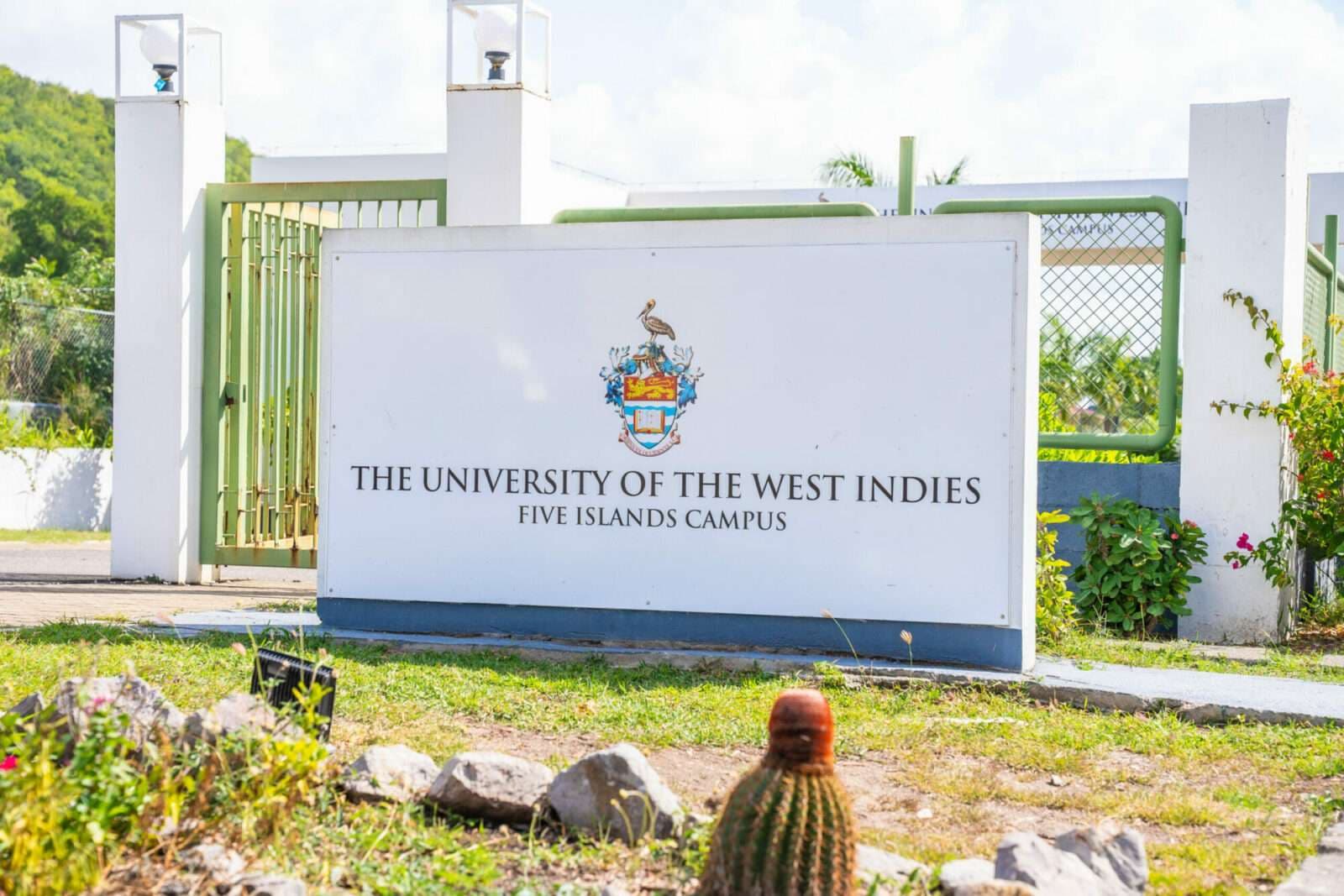
The reported proposal to conduct University of the West Indies law classes at the Antigua and Barbuda Labour Party headquarters must be rejected clearly, immediately and without qualification by us the people. UWI has already demonstrated that it is compromised for even considering it!
The establishment of an accessible local law programme may be a welcomed development, this question in an of itself needs to be examined. What data/information led to law being chosen from amongst scores of other deciplines and is it what our small developing state requires at this time. Let’s get back to that.
But that question aside, having law classes here would certainly allow Antiguans and Barbudans to pursue an LLB and other legal qualifications without bearing the full cost of studying overseas. Still, a worthwhile objective cannot justify a fundamentally improper arrangement. UWI knows or ought to know that the location in which legal education is delivered matters especially when that location is the headquarters of the governing political party.
This is not a debate about whether the building is large enough, modern enough, conveniently located or offered free of charge. Those considerations are irrelevant. Some buildings are unsuitable because of what they represent and the activities with which they are associated.
A well-appointed building used for gambling or prostitution or as a gang headquarters would not become an appropriate location for a kindergarten merely because it had empty classrooms. Its physical suitability would not erase its institutional character. In the same way, a political party headquarters does not become an appropriate university campus simply because space is available.
Even if the classes were accommodated without financial cost, the intangible price would be far too high. Again the administrators of a premier educational institutions with a rich legacy knows this.
Why?
Well, it is simply unheard of that students would be required to enter a partisan political environment to receive a public university education. Political symbols, party personalities and party activities would surround their academic experience. That creates legitimate concerns about influence, recruitment, indoctrination, perceived political allegiance and the treatment of students who support another party—or no party at all.
No student should ever feel that access to legal education requires entering the political home of the governing party.
UWI must therefore uphold the ethical and institutional standards expected of the Caribbean’s premier university. Its independence must not only exist; it must be visible and beyond reasonable doubt. If UWI accepts this arrangement, it risks conveying that its decisions are susceptible to political direction rather than governed by academic principle, proper administration and the equal treatment of every student.
The University must ask itself a simple question: would it be equally comfortable operating law classes from the headquarters of the United Progressive Party? If the answer is no, then the principle is already settled.And if the answer is yes then my people we have a deeper problem here.