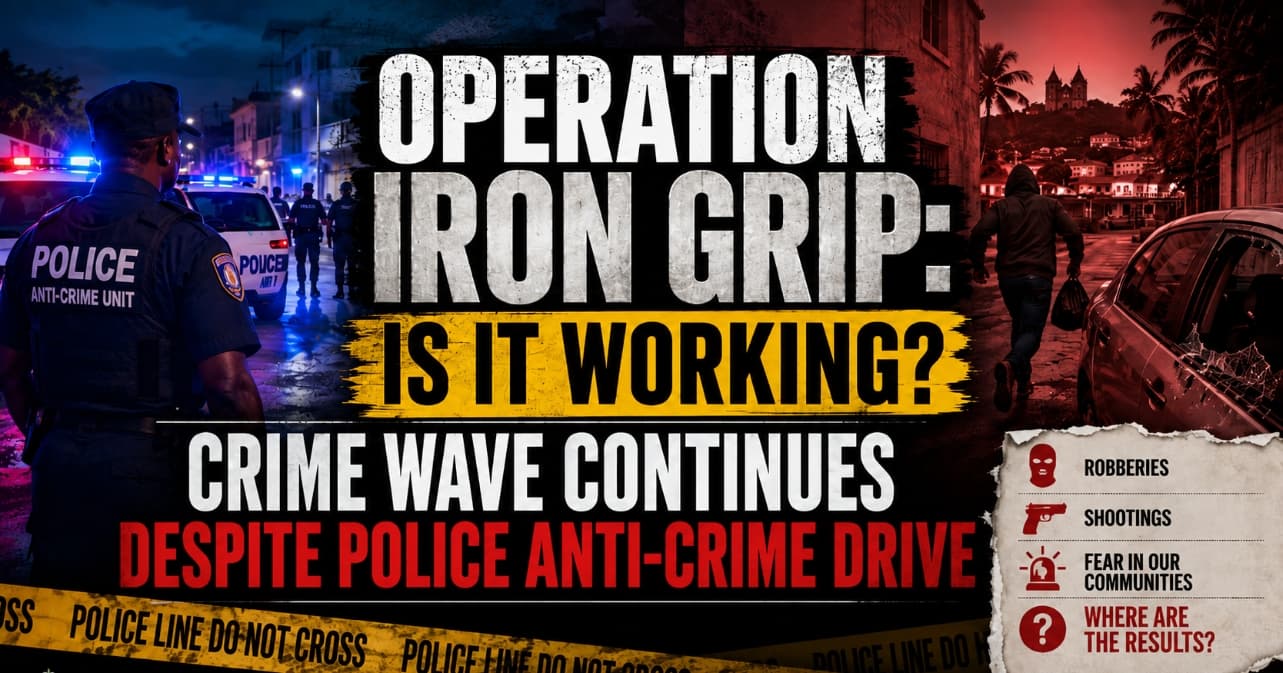
When Deputy Commissioner of Police Albert Wade announced Operation Iron Grip on June 9, the promise was clear and specific. Crime in Antigua and Barbuda is not random, he said — it is predictable, and therefore it can be disrupted. Officers would move from routine patrols to targeted enforcement, closing the corridors between criminal hotspots and ensuring, in Wade's own words, that "you cannot successfully move from point A to point B without being stopped by a police officer."
Nearly four weeks later, the question being asked with growing urgency across Antigua and Barbuda is straightforward: is it working?
What the Commissioner Jeffers Claimed
Commissioner of Police Everton Jeffers provided the first public accounting of Operation Iron Grip's results in a radio interview last week, saying the operation has yielded multiple arrests, including chain-snatchers, and the seizure of an illegal firearm. Two men were apprehended in a vehicle containing a firearm and five rounds of ammunition. A car chase in the Spanish Town area resulted in the arrest of a 14-year-old and an 18-year-old — the latter accused of pointing a weapon at officers. Chain-snatching suspects had been brought in with the assistance of tip-offs from members of the public.
"Operation Iron Grip is a net set to catch criminals," Commissioner Jeffers told listeners.
Those are not trivial results. Firearms off the street and chain-snatching suspects in custody represent genuine law enforcement progress. But the Commissioner's own framing — a net set to catch criminals — invites an equally direct question: who and what is still slipping through?
The Crime Wave That Continued
The answer, based on the incidents recorded since Operation Iron Grip was launched, is troubling.
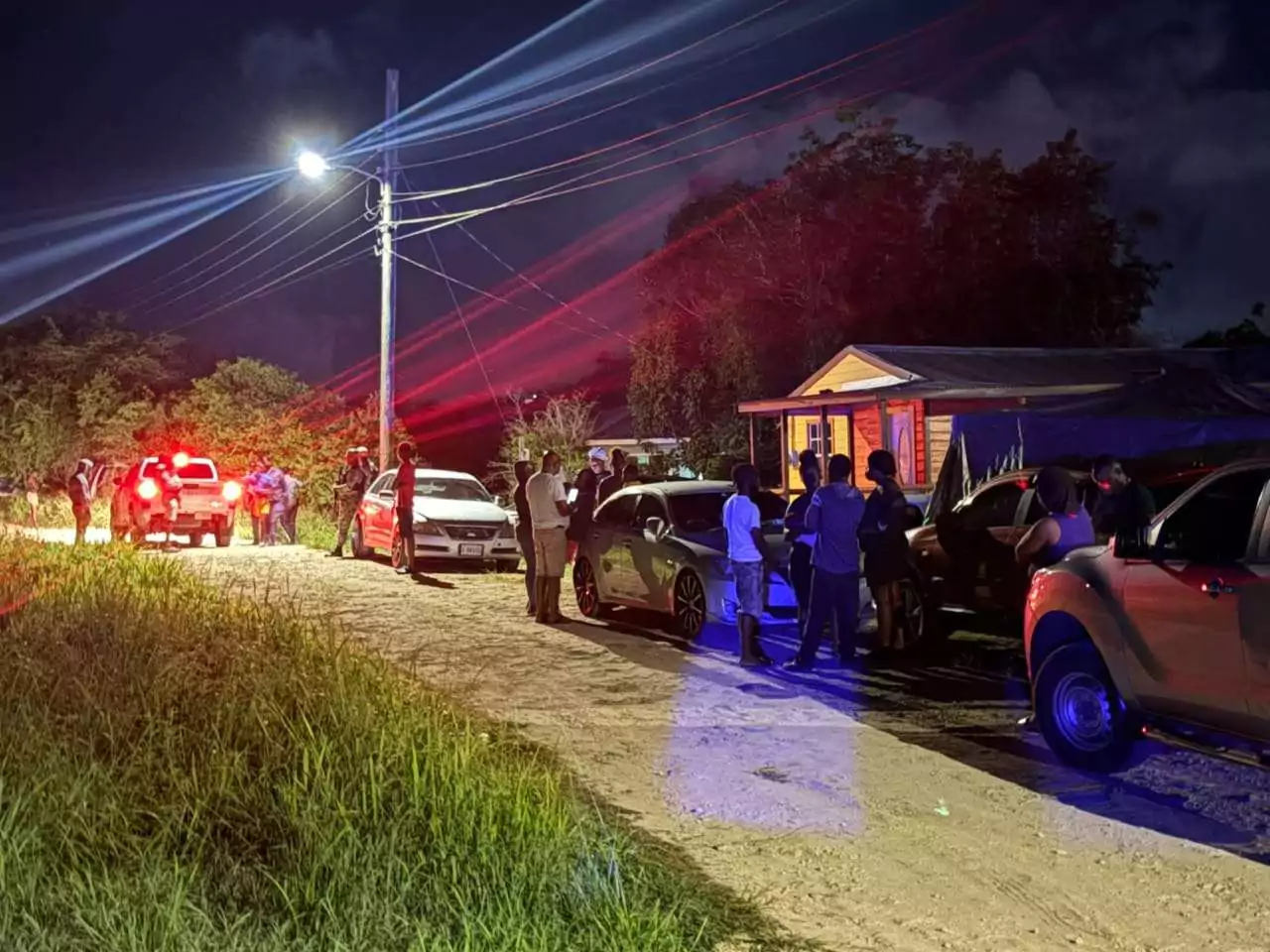
Since the operation began on June 9, Antigua and Barbuda has recorded: a man shot through his vehicle window by a masked gunman on Dickenson Bay Street; a young boy found with multiple stab wounds following a suspected kidnapping; a 67-year-old woman reported she was raped in her home by an intruder who forced his way through her chain lock in the early hours of the morning; two teenage boys shot by hooded gunmen outside a tattoo shop on South Street on June 27; and a 16-year-old boy shot in the chest on Armstrong Road on July 1, currently fighting for his life in critical condition, struck by a lone gunman who approached two teenagers on a public road at 5:30 p.m. and opened fire in broad day light.
There have also been multiple business break-ins across Fort Road, Belmont, All Saints, Cross and Nevis Streets, and Buckley Line; a home invasion at a Paradise View residence that left an elderly man hospitalised; a knifepoint robbery at Lower Ottos captured on surveillance camera and shared widely on social media; three business break-ins in a single week; and a man beaten unconscious and robbed near the West Bus Station after leaving a casino.
This is the backdrop against which Operation Iron Grip is being assessed.
The Structural Problem
Deputy Commissioner Wade was unusually candid when he launched the operation, acknowledging that the Force's existing patrol model had not been delivering the level of disruption needed. He even admitted that officers driving with windows up and air conditioning running had made them less attuned to what was happening in the communities they patrol.