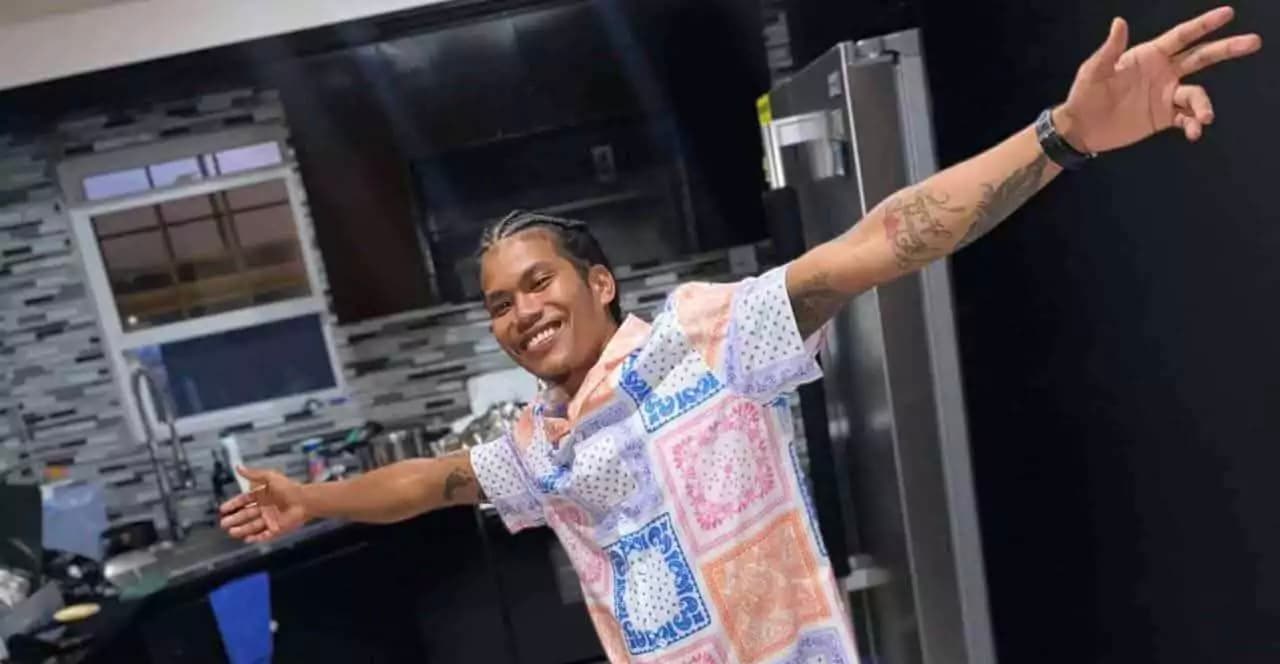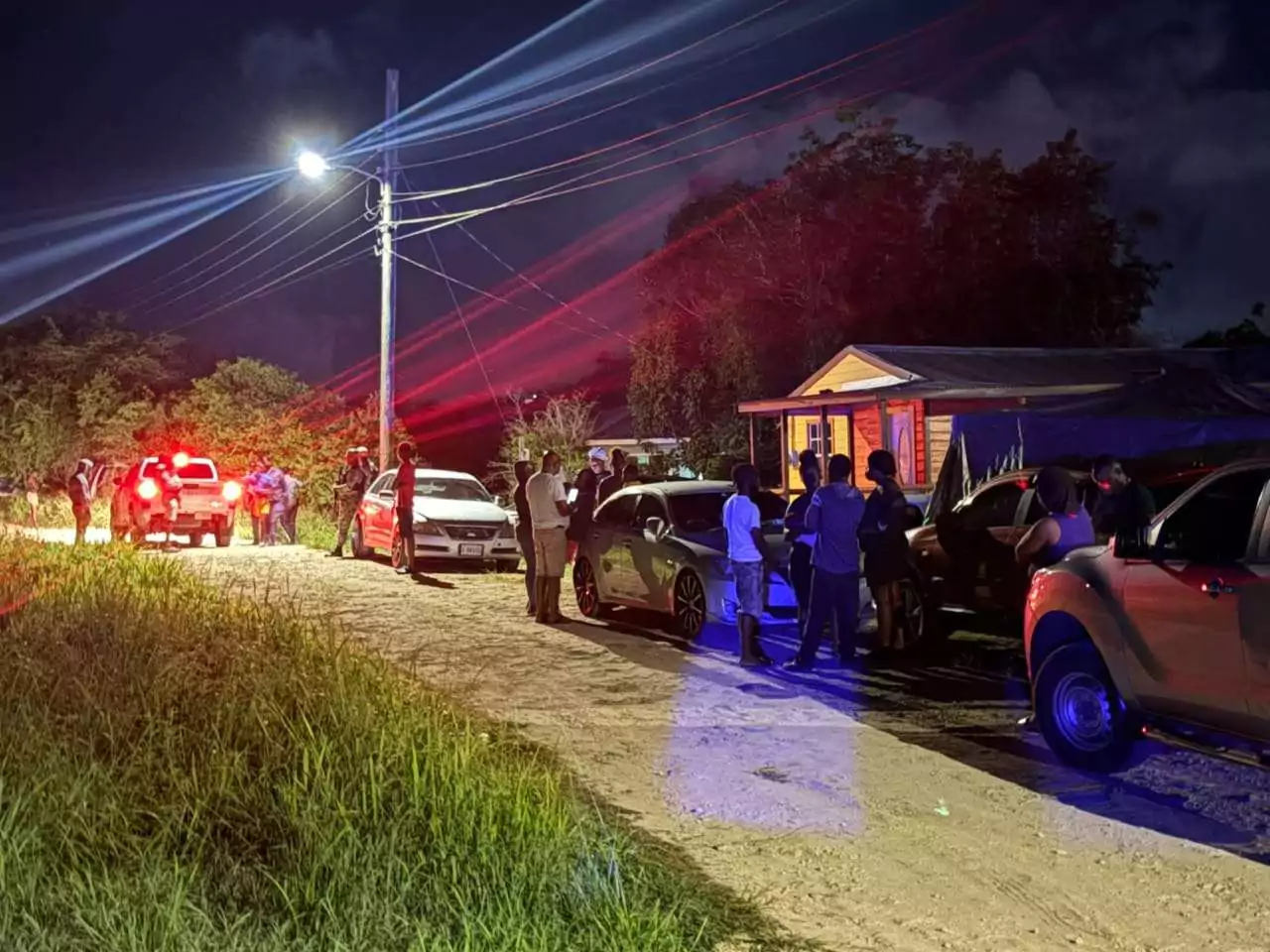
Shortly before midnight on Monday, three masked gunmen forced their way into a home in Bathlodge and opened fire on the people inside. Twenty-year-old Saquania Anthony was found unresponsive with multiple gunshot wounds and pronounced dead at 1:58 on Tuesday morning. She was a mother of two — and pregnant with her third child. A 13-year-old boy, shot in the face, remains in serious condition; a 24-year-old man is stable. Two suspects were arrested within hours, and police are hunting a third.
Commissioner of Police Everton Jeffers said he was "deeply disgusted and disturbed by this senseless act of violence," promising that forensic, intelligence, investigative and operational resources would pursue every available lead and warning that anyone sheltering the killers would face consequences.
The vow is familiar. It is the third time this year the country has heard the language of relentless pursuit — and the Bathlodge killing lands more than three months into Operation Iron Grip and five weeks into Operation Restore Confidence, the two flagship anti-crime drives of the Royal Police Force of Antigua and Barbuda. Set against the month-by-month record of 2026, Saquania Anthony's death forces the question those operations were launched, in part, to dispel: is any of this actually working?
January to May: The Violence Arrives Before the Strategy
The year did not begin quietly. A chronology of gun-related crime published by the Daily Observer on 7 September records a 47-year-old homeowner shot in the abdomen during a masked home invasion in All Saints on 14 January, a man shot twice in the thigh on Parliament Street, Gray's Farm, on 21 January, and — two days later — the killing of 42-year-old Nikisha Rose, gunned down in her vehicle in Michael's Village, the year's first homicide.
March brought two more entries to that grim ledger: Ashworth O'Brien, found dead in Gray's Farm on 10 March, and teenagers Omarie Lewis and Brianna Clarke, shot dead together in Villa on 26 March. By early March, police officials themselves acknowledged that homicides had increased by 100 percent compared to the same period in 2025 — a striking reversal for a Force that, as recently as December, was reporting a net reduction of 280 crimes for the year even as it conceded violent offences were rising.
April deepened the pattern. Four young men aged 17 to 20 were shot by an unknown assailant on Corn Alley on Easter Sunday, and on 26 April gunfire erupted along Queen Elizabeth Highway near a public concert staged by the ABLP. Prime Minister Gaston Browne condemned that incident as "an act of criminal violence" rooted in illegal guns and ongoing disputes and pledged decisive action against illegal firearms and gang activity.
The pledge was not matched, in those months, by any named, publicly articulated police operation. What followed in May were: 35-year-old Sheldon Dias hacked to death in Mack Pond, All Saints, Russian sailors beaten and robbed in an early-morning St. John's attack, an 11-year-old boy beaten with a glass bottle in Golden Grove Extension, and a string of break-ins and street robberies, several captured on camera.
June: Iron Grip Arrives — and the Gunfire Continues
The Force's first named answer came on the nineth of June. Announcing Operation Iron Grip on Observer Radio, Deputy Commissioner Albert Wade argued that "crime is not random. We think it's predictable" — and therefore that it could be disrupted, with officers moving from routine patrols to targeted enforcement so that offenders could not travel between locations without being intercepted. Deputy Commissioner Wade was unusually candid, admitting that existing patrols were not disrupting criminal elements and that officers driving with windows up and air conditioning running had grown less attuned to their communities.
The operation produced some results. Commissioner Jeffers, calling Iron Grip "a net set to catch criminals," reported chain-snatching arrests, the seizure of an illegal firearm and five rounds from a vehicle, and a Spanish Town car chase that ended with a 14-year-old and an 18-year-old in custody.
But the net had holes. In the weeks after the launch, a young boy was found with multiple stab wounds in a suspected kidnapping, a 67-year-old woman reported being raped by an intruder in her home, an elderly Paradise View man was hospitalised after a violent home invasion, two teenagers were shot by hooded gunmen on South Street on 27 June, and a 16-year-old was shot in the chest on Armstrong Road at 5:30 in the afternoon on 1 July.
July: PM Browne says "We're Doing Well"
It was against that backdrop that the Prime Minister offered his mid-year verdict. Citing approximately four homicides at the halfway mark and comparing Antigua and Barbuda favourably to its OECS neighbours, PM Browne told radio listeners, "we're doing well in the circumstances." He urged citizens to resolve conflicts amicably and pointed to youth intervention programmes as possible solutions to the spike in crime and violence. The homicide figure cited by the PM sat uneasily beside the reported record, which by then already included the Dias killing alongside four fatal shootings — and July made the arithmetic worse. On 19 July, a man was killed and a teenager critically injured in a brazen drive-by shooting near Potters Primary School — the victim was 29-year-old Leyandrew Hubbard. Days later another victim of a fatal shooting this time in Freeman's was identified as Eleazer "Fresshy" Francis. A senior citizen was shot at Mount Joy, and on 27 July a man was shot in the neck outside his Bellevue Estate home in what this newsroom described as another night of gunfire in a summer that refused to let up.
August: A Shot Investor and a Second Operation
August opened with a man shot while sitting in a parked vehicle on Tonge Lane on the 3rd day of the month. Two young men were shot during the day near the West Bus Station on the 6th of the month. Then, on 9 August, gun violence reached one of the most heavily guarded compounds in the country: 59-year-old investor Yida Zhang was shot twice at the YIDA Special Economic Zone at Crabbs. Real News reporting subsequently found that the official record listed a break-in at the property — for which three men were already in custody — and the shooting of Zhang as unrelated events three days apart, contradicting initial accounts that conflated the two and leaving residents asking why, a question yet to be answered.
One week after Yida was shot, the Force unveiled its second operation. Operation Restore Confidence, launched with an early-hours sweep on Sunday 16 August, deployment of intelligence-led search warrants, mobile patrols, vehicle checkpoints and stop-and-search exercises targeting illegal firearms, drugs and stolen property. Operation Restore Confidence netted an Astra CUB .25 pistol with matching ammunition, and police stressed it was not a one-off exercise, and promised continued collaboration of the CID Task Force, K-9 Unit, Narcotics, the Special Services Unit and other specialist departments. The follow-through was visible: a 9mm pistol and eleven rounds recovered from a car on Nut Grove Road on 19 August, with three people detained and warrants executed in Jonas Road and Liberta, and ammunition, suspected drugs, a ski mask and cash seized in Potters Village raids a day later.