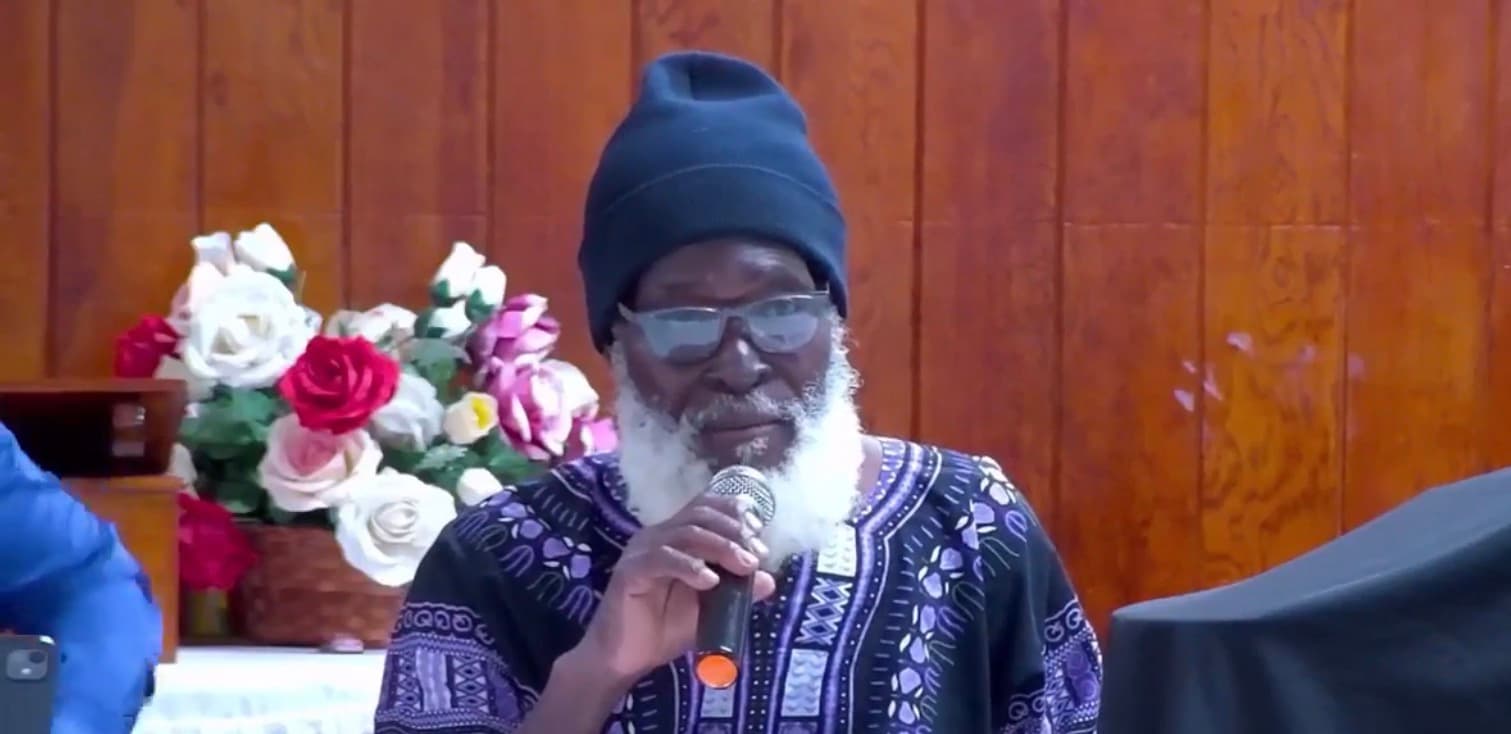
A retired senior police officer has delivered a blunt and devastating assessment of Antigua and Barbuda’s readiness to accept third-country deportees from the United States — telling a packed town hall meeting on Thursday night that the Royal Police Force is already failing to cope with the country’s existing crime challenges, and that layering the complexity of the deportee arrangement on top of that reality is a recipe for disaster.
Retired Assistant Commissioner of Police Nuffield Burnette, who spent his career in law enforcement and is the author of two published books on policing and governance, was invited by the United Progressive Party to address the public safety dimension of the government’s White Paper at the town hall held at the Moravian Conference Centre on Cashew Hill.
“The Most Learned Force in History — and the Worst It Has Ever Been”
Burnette opened with an observation that silenced the room. The Royal Police Force of Antigua and Barbuda, he said, has never had as many educated and degreed officers in its ranks as it does today — and yet, paradoxically, has never performed worse.
“We have not seen as many degreed persons as we would have seen in the past in our Royal Police Force. It is the most learned persons we would have seen, in my view, in the history of the Royal Police Force of Antigua and Barbuda, but yet is the worst the force has been in the history of the Royal Police Force of Antigua and Barbuda, and that is a fact,” Burnette said.
“So it means that something is wrong. Something or things are wrong. Lots of things need to be corrected, and some of it has to do with the powers that be — meaning from government to the police hierarchy and down to the last serving member of the force.”
Antigua Is Not as Safe as You Are Told
Burnette took direct aim at the narrative that Antigua and Barbuda is among the safest countries in the Caribbean — a claim Prime Minister Browne repeated just days ago when he cited the country’s relatively low homicide count and declared, “we’re doing well in the circumstances.”
The retired officer said that narrative is a myth built on a misleading metric. He acknowledged that other Caribbean nations like Turks and Caicos, St. Lucia, St. Kitts, and St. Vincent record more homicides per capita, but argued that in those countries the killings are largely linked to gang-on-gang activity. Antigua and Barbuda’s crime profile, he said, is different — and in many ways more frightening.
“What do you see in Antigua and Barbuda? We see more of what I refer to as domestic crime, which is even more serious than those countries, because our crimes primarily have to do with home invasion, and nothing is more traumatizing than crimes to do with home invasions,” he said.
He reminded the audience of the serial killers who terrorised the island not long ago, breaking into homes and murdering occupants — five people killed in a short space of time, all in the sanctity of their own homes.
“We say from time to time in law enforcement that you do not run away from your house; you run towards your home because your house is your castle. So if it is that home invasions is our prevalent crime, alongside robberies, we have serious problems.”
The Crime Statistics Cannot Be Trusted
In one of his most candid admissions, Burnette told the audience he had deliberately come to the town hall without crime statistics — because the official figures are not reliable.
“The stats are not accurate, and we know that. Persons do not report everything,” he said, citing distrust of how police handle complaints as one reason for underreporting. “I can even speak to situations where I know for a fact that persons try to suppress certain reports so as to make it look as though it’s not that much, it’s not that serious, and that is done for obvious reasons — to appease persons and perhaps to make the government of the day look good.”